Showing posts with label confinement. Show all posts

5 Jun 2011

Religious fanatic Phillip Garrido and wife sentenced to life in prison for kidnapping and torturing Jaycee Dugard


Los Angeles Times   -  June 3, 2011

Kidnappers Phillip and Nancy Garrido are sentenced in sex-slave case


Phillip and Nancy Garrido, the Bay Area abductors of Jaycee Lee Dugard, whom they held in captivity for 18 years, get 431 years and 36 years to life in prison, respectively.

By Maria L. La Ganga, Los Angeles Times


Reporting from Placerville, Calif. -- Twenty years after Jaycee Lee Dugard was abducted while walking to her school bus stop, the couple who kidnapped and raped her and stole her childhood were sentenced Thursday to prison terms that could keep them behind bars for the rest of their lives.

Phillip Garrido, a 60-year-old serial predator, was sentenced to 431 years to life in prison. His 55-year-old wife, Nancy, was sentenced to 36 years to life and cannot be paroled until she is in her 70s.

As he imposed the lengthy prison term, Eldorado County Superior Court Judge Douglas C. Phimister said Garrido "lacks a soul" and called his actions "beyond horrible." A tearful Terry Probyn, Dugard's mother, described her daughter's attacker as "the epitome of disgust … some evil being."

And Dugard herself, in a defiant statement read by her mother during the emotional hearing, said the man who kidnapped her as a sex slave, raped her over a period of years, videotaped many of the attacks and fathered her two children "stole my life."

"To you, Phillip, I say … I hated every second of every day of 18 years because of you," said Dugard, who was 11 when she was abducted. "To you, Nancy, I have nothing to say. As I think of all those years, I am angry. You stole my life and that of my family."

Dugard, now 31, did not attend the hearing, she said, "because I refuse to waste another second of my life in your presence."

The Garridos abducted Dugard on June 10, 1991, as she was heading to school in her South Lake Tahoe neighborhood while her horrified stepfather leapt on a mountain bike in pursuit. The case made international headlines when Dugard resurfaced in August 2009 with her children — after a UC Berkeley policewoman spotted an odd-acting Garrido with the little girls on campus.

During Thursday's hearing, Dugard's former captors sat flanked by their attorneys in Department 7, which was packed with reporters, cameras, a few of Dugard's family members and Katie Callaway Hall, whom Garrido was convicted of raping in 1976.

Dugard's aunt, Tina, told Phimister during the sentencing that the abduction left the entire family "under a cloud of despair" and killed Tina's mother, Dugard's grandmother.

"My mom died less than a year after Jaycee was stolen from us," she said. "My mother died of a broken heart. Facing life without her beloved Jaycee was more than my mom could handle. "

But the most heart-wrenching testimony came from Probyn. She and Carl Probyn, Dugard's stepfather, divorced after the abduction. He has said that the crime and its aftermath "ended" their marriage.

Probyn talked about the joy she felt on May 3, 1980, when her daughter was born at 10:52 p.m. — blond hair, blue eyes, 6 lb. 4 oz., "a true miracle," "a gift from God." She told the court how, when Dugard's belly hurt, she would rock her little girl in her arms and sing, "You Are My Sunshine."

The day Dugard was taken, Probyn said, "my world went dark, and my sunshine was taken away." Probyn described the months and years of not knowing her daughter's fate as "hell on this earth."

"I could hear her crying, but not with my ears, with my heart," said a tearful Probyn. "I could feel her pain, not with my body, but with my heart. I endured a huge gaping hole in my heart, that some evil being put their hand in and ripped it out."

Garrido was driving that June morning. He and Nancy had blankets in the car and a Taser. They were "shopping for a victim," Phimister said Thursday. "What was the conversation in the car? 'Should we select this one? That one? What are we looking for?'"

Once they settled on Dugard, Garrido stunned the little girl with the Taser, and Nancy snatched her. They put her in the car, covered her with blankets and headed to their home in Antioch, an East Bay suburb, where they had prepared an undetectable warren of tents and sheds in the backyard.

Dugard was locked in one of the backyard buildings for a year and a half as a "prisoner," said Dist. Atty. Vern Pierson in court documents recommending that Garrido receive a sentence of 431 years to life. She did not leave the backyard for the first four years after the abduction.

Dugard "was impregnated by Phillip Garrido when she was 13 years old and had her first child at the age of 14," Pierson said in the document. She "was again impregnated by Phillip Garrido when she was 16 and had her second child at the age of 17."

The children were delivered by Nancy in the couple's ramshackle compound; neither they nor Dugard set foot in a schoolroom or saw a doctor until they were discovered in 2009.

Phimister said Garrido kept Dugard in line by threatening that "if she escaped, pain would be imposed. You would Taser her." He "reinvented slavery" and turned the girl into "chattel," morphed a human being into "a piece of furniture to use at your whim."

According to grand jury testimony released Thursday, Garrido never tased Dugard again after the first attack but kept the weapon lying openly around as a threat.

"When I didn't want to do something that he wanted me to do, he would turn it on and say, something like, you know, 'You don't want it to happen again. You should be good,'" Dugard testified before the grand jury on Sept. 10, 2010.

"I didn't want it to happen again," she told the grand jury. "So I was good."

Dugard testified that Garrido told her "he had a sex problem and that, you know, he got me so he wouldn't have to do this to anybody else. So I was helping him."

Phimister fumed that Garrido gamed the system when he was released far short of the 50-year sentence he had received for kidnapping and raping Callaway Hall. And he was furious that more than a dozen healthcare professionals had examined the man through the years and failed to recognize that Garrido is "evil."

Susan Gellman, Garrido's attorney, read a brief statement from her client when it was her turn to address Phimister. Four sentences long and entirely in the third person, the statement from Garrido said he had pleaded guilty to all charges and "accepted responsibility for his actions."

"He has done that with no expectation of leniency," the statement continued, "and because he wanted to spare everyone, including Ms. Dugard and the children, the ordeal of the trial."

Although Gellman called the sentence excessive, she said Garrido had expected a harsh outcome. His main concern now, she said, is being able to communicate with his wife when they are in prison.

About Dugard and the girls, she said, "he cares about them very much, despite the fact that he felt driven to tell his story — that he changed, 12 years before he was apprehended."

Nancy Garrido sobbed through much of the sentencing and looked Dugard's mother and aunt in the eye as the two women were describing the impact of the abduction on their family. The reason, said Stephen Tapson, her attorney, was that she wanted them to know she is sorry.

Reading her statement in court and speaking with reporters afterward, Tapson said that Nancy "wanted Jaycee to know she is sorry for what she did, that there is no way to express that. I stole your life, and there's no way to explain it away."


This article was found at:


*********************************************************************

Los Angeles Times   -   June 4, 2011

Jaycee Dugard's words tell vividly of her long ordeal


In the newly unsealed transcript of her grand jury testimony, Jaycee Lee Dugard recounts her abduction and captivity and explains why she never tried to escape.

By Maria L. La Ganga, Los Angeles Times


Reporting from Placerville, Calif. -- At times, the voice is young and terrified — an 11-year-old girl who was kidnapped during the last week of school, raped for years and kept in line under threat of pain.

At times, the voice is brave and resilient — a mother protecting her vulnerable daughters, struggling to give them a normal life under the most horrific of circumstances.

And at times, it is angry and defiant — a survivor facing down her abusers and prevailing.

Always, though, the voice is Jaycee Lee Dugard's. On Thursday, it was heard loud and clear for the first time since she was abducted 20 years ago while heading to the bus stop.

Revealing the child she was and the woman she has become, Dugard's voice rang out in Department 7 of El Dorado County Superior Court, where Phillip and Nancy Garrido were sentenced Thursday for kidnapping and rape, and in the unsealed transcript of the secret grand jury hearing that led to the couple's 2010 indictment.

Dugard's own words give the clearest picture of her ordeal to date. Her memoir, "A Stolen Life," will be published July 12. But until then, the transcript and the statement read at the Garridos' sentencing are the first windows into the life of a young woman who was held in captivity for 18 years and gave birth to two daughters by the man who raped her.

"Phillip wanted us to be a family," Dugard testified. "He was our dad, and Nancy was their mom. You know, that's what we did … to give the kids, you know, normal as possible" a life.

After sentencing the Garridos on Thursday to prison terms that could keep them behind bars for life, Superior Court Judge Douglas C. Phimister unsealed the transcript from the grand jury hearing. It was the only time Dugard testified. The Los Angeles Times, the Sacramento Bee and several other media outlets had intervened in the case, seeking to have the transcripts made public.

Attorney Karl Olson argued on behalf of the media that the right to privacy does not justify continued secrecy on behalf of a rape victim whose name was made public by law enforcement officials and who has chosen to write a memoir of her ordeal.

Dugard's family, the El Dorado County district attorney and lawyers for the Garridos vehemently disagreed. Phimister was only partly supportive, keeping more than 20% of the transcript under seal, calling the segments in which Dugard's sexual attacks were described as "disgusting" and "inappropriate," material that "would qualify as pornography."

Phimister decried the media for "asking the court to assist in the exploitation of this child," and declared that he would not do so.

The 123 pages that were unsealed paint a terrifying portrait of a sick man who kidnapped a little girl to satisfy his sexual perversions. Who intimidated his wife into taking part in the abduction and condoning the rapes. Who believed he was doing nothing wrong.

On June 10, 1991, the Garridos were driving in South Lake Tahoe when they spied Jaycee, heading up the hill for her school bus. She was 11 and had just yelled goodbye to her stepfather, who was in their garage. It was about 7:30 a.m.

The Garridos' car "creeped up" behind the little girl. A voice called out, asking for directions. "And then," Dugard testified, "all of a sudden his hand shoots out and I feel tingly and like losing control, and I'm in the bushes, trying to go back, and somebody is dragging me."

The couple had hatched plans to go "shopping for a victim," Phimister said in court Thursday, and they were equipped with blankets and a Taser. Garrido, who was driving, shocked Jaycee, and Nancy dragged her into the car. She was laid face down on the floorboards of the back seat and covered up. She blacked out.

The Garridos took Jaycee back to the ramshackle warren of tents and sheds they had constructed behind their house in Antioch, northeast of Oakland. The drive, Dugard said, "seemed like forever." Garrido sexually assaulted her on arrival.

"I was very scared," Dugard testified. "I didn't know who he was. I didn't know why he was doing this. I just wanted to go home. I think in the bathroom I kept telling him that, you know, 'I don't know why you're doing this.'

" 'If you're holding me for ransom, my family doesn't have a lot of money,' " she continued. "I didn't know — I didn't know his purpose."

The Garridos gave her "Barbie stuff" during her first birthday in captivity. Garrido gave her a cat to keep her company when she complained about loneliness. But then he took it away because it messed up the small space where he kept her prisoner. She would figure out the date by watching the morning shows on television.

For the first three years, until the birth of her first daughter in August, 1994, Garrido would force himself on Jaycee once a week or more. After the birth of the child, the frequency of the rapes slowed. Nancy, who would take Jaycee food, offered to have sex with her husband instead. She would say, "Oh, I'll take this run for you."

After the first birth, Dugard testified, "things really changed. He said that he was eventually going to stop having sex with me and that, you, know, he's just really trying to change and he wants us all to be a family."

The last time Garrido raped Dugard was the day her second daughter was conceived. That child was born in November 1997.

The Garridos let Dugard pick a name. She chose Alissa. The "family" began to celebrate the little girls' birthdays together. A swing set was installed in the compound. Dugard told the grand jury that she did what she could to give her children a normal life.

But there wasn't much that she could do. She couldn't leave. At first because she was terrified.

There were Doberman pinschers on the property, Garrido told her on the day she arrived in Antioch, and they were vicious. "I didn't know where they were," she testified. "So I was afraid to do anything. I didn't know what he would do either."

Garrido never used the Taser on Dugard again after the abduction. But he kept the weapon lying around, an implicit threat. When she refused to follow his commands, he would turn the weapon on and tell her, "You don't want it to happen again. You should be good."

"I didn't want it to happen again," Dugard testified. "So I was good…. Tried to do what he wanted me to do even though I didn't like it."

Later she stayed in part because she felt she was "helping somebody, even though it was in a really sick, perverted way."

Dugard testified that Garrido told her he had a "sex problem and that, you know, he got me so he wouldn't have to do this to anybody else. So I was helping him."

And finally, she said, she stayed because she had no place to go. During 18 years in captivity, she never tried to escape.

"We went places later as a family, but never by myself," Dugard testified. "And I wanted him to teach me how to drive and stuff. And that never came. I didn't know what to do. I couldn't leave. I had the girls. I didn't know where to go, what I would do for money or anything.

"I didn't have anything."

Dugard has been free for nearly two years, and she has spent that time in seclusion with her mother and daughters, writing her book, seeing therapists, working to build back the life that the Garridos stole from her.

She is angry, she said in the statement that her mother read in court on Thursday, but she will prevail.

"Everything you have ever done to me has been wrong, and someday I hope you can see that," she said. "Thankfully I am doing well now and no longer live in a nightmare. I have wonderful friends and family around me. Something you can never take from me again.

"You do not matter anymore."


This article was found at:

http://www.latimes.com/news/local/la-me-0604-jaycee-dugard-20110604,0,7538871.story


RELATED ARTICLES ON THIS BLOG


Religious fanatics Phillip Garrido and wife plead guilty to kidnapping, raping and confining Jaycee Dugard


29 Apr 2011

Religious fanatics Phillip Garrido and wife plead guilty to kidnapping, raping and confining Jaycee Dugard


Los Angeles Times   -  April 29, 2011

Couple take plea deal in Jaycee Dugard kidnapping


Phillip Garrido will get 431 years to life in prison. His wife, Nancy, will get 25 years to life, plus 11 more years. The Northern California couple pleaded guilty to kidnapping, raping and holding Jaycee Dugard captive for 18 years.

By Maura Dolan, Los Angeles Times


A married couple in Northern California pleaded guilty Thursday to kidnapping Jaycee Dugard when she was 11, raping her and confining her in a hidden backyard encampment for 18 years in a plea deal that will spare the victim from having to testify at a trial.

Phillip Garrido, 60, and his wife, Nancy, 55, entered their pleas in an El Dorado County courtroom in a case that drew international headlines after Dugard and two daughters she bore with Phillip Garrido were discovered in August 2009. The Garridos faced 29 charges of kidnapping and sexual assault.

Under the plea deal, Phillip Garrido will receive a maximum possible sentence of 431 years to life in prison. He pleaded guilty to kidnapping and 13 counts of sexual assault.

Nancy Garrido, who snatched Dugard in 1991 and later helped deliver her babies, pleaded guilty to kidnapping, one count of rape by force for aiding and abetting, and other charges in exchange for a sentence of 25 years to life, in addition to 11 more years.

She will be eligible for parole in 31 years, but El Dorado Dist. Atty. Vern Pierson said he was "confident she will spend the rest of her life in prison." He said she agreed to the plea only because her husband also pleaded guilty and waived his right to appeal.

"The enormity of the defendants' actions has caused tremendous pain and suffering to Jaycee, her mother Terry Probyn and their family," Pierson said in a written statement. "With a guilty plea by both defendants, Terry, Jaycee and her children can now be spared the grief and trauma of having to be dragged into the court process to testify at a jury trial."

Pierson praised Dugard's "strong cooperation" in the prosecution of the couple and said her "courage and willingness to confront her abductors in court directly led" to the plea agreement.

Both Garridos are scheduled to be sentenced June 2. They waived their rights to appeal.

Dugard, now 30, and her family received a $20-million settlement from the state after filing a claim that charged authorities with failing to supervise Phillip Garrido, who was on parole for rape when he and his wife kidnapped Dugard while she was waiting for a school bus in view of her South Lake Tahoe home.

A state investigation found that parole agents missed opportunities to rescue Dugard during visits to the Garrido home. At least three parole agents spotted Dugard but failed to determine her identity, the state said.

Even after receiving a tip that children were living with the Garridos, authorities did not search the backyard, where Dugard and her daughters lived behind a fence in tents and soundproof sheds.

Dugard and her daughters never attended school or visited a doctor or a dentist while in captivity. She took the name "Alyssa" and pretended to be the eldest daughter of the Garridos. Her own daughters thought she was an elder sister before the Garridos' arrest, authorities said.

They were rescued after UC Berkeley police officers became suspicious when Phillip Garrido brought the two girls to campus to distribute religious fliers. The girls called Garrido "Daddy" and mentioned they had an older sister.

When first questioned by parole agents, Dugard tried to protect Garrido and refused to reveal her true identity. She reportedly has been receiving therapy and lives with her family in Northern California.

In a written statement, Pierson pointed out that the law does not permit the death penalty or life without possibility of parole for the Garridos' crimes.

Thursday's actions "can finally bring certainty and closure to Jaycee and her family who have waited almost 20 years for justice in this case," Pierson said.

Attorneys for the Garridos did not respond to requests for comment.


This article was found at:


RELATED ARTICLES ON THIS BLOG:


Garrido "talked a lot about Jesus" to his 1976 victim after raping her repeatedly over 5 hours


Child sexual abusers commonly turn to religion to rationalize their behavior


Self-proclaimed prophets: Phillip Garrido, David Berg and Joseph Smith


Kidnap victim kept in backyard compound of religious fanatic for 18 years


23 Mar 2011

Pastor of Wisconsin house church charged for beating children with rods says he was just using biblical punishment


Wisconsin State Journal - March 18, 2011

Black Earth pastor, brother charged with child abuse for spanking kids with dowels, rods


By DEVIN ROSE


The head pastor of a Black Earth church and his brother have been charged with a total of 12 counts of child abuse, according to a criminal complaint filed Friday in Dane County Circuit Court.

Philip Caminiti, 53, head pastor and elder at Aleitheia Bible Church, and his brother, John Caminiti, 45, also of Black Earth, allegedly hit the backsides of children with rods and dowels. The alleged victims are children in the Caminitis' family and other children whose families are part of the church.

"If you spank early and it is done right, then kids will be happy and obedient," Philip Caminiti told investigators.

He also admitted to instructing parents within the church — which holds services and meetings at his and another member's home — to hit their children on the bare buttocks with a rod because there's a large amount of flesh there.

He told investigators he likes the immediacy of spanking and the Bible says a rod should be used.

Philip Caminiti faces up to 6 years in prison and up to a $10,000 fine, or both, for each of the eight counts, which range from June 2006 to November 2010.

John Caminiti told investigators in November he uses a rod or dowel on his two youngest children at home or at church and the scriptures make it clear his behavior is allowed.

He said he does not allow his family to communicate with people outside his religious beliefs and has punished his wife and son by shunning, or confining them to their rooms to have no contact with other family members, until they corrected their disobedience.

For each of his four counts of party of a crime of mental harm to a child, he faces up to 12½ years in prison and up to a $25,000 fine, or both. The penalties for each of his four counts of intentional child abuse are the same as his brother's.

This article was found at:


RELATED ARTICLES ON THIS BLOG:


Corporal punishment slows the intellectual growth of children: researchers


Line between spanking and abuse difficult to determine


Controversial new study on spanking contradicts abundant research that it is counterproductive


Religion and Child Abuse


Forced into Faith: How Religion Abuses Children's Rights [book]


For fundamentalist Christian group there is No Greater Joy than biblically beating kids into religious submission


Fundamentalist parents using biblical discipline charged with murder & torture of adopted daughters


11 boys removed at faith-based Reclamation Ranch


"The Spanking Room – A Child's Eye View of the Jehovah's Witnesses"


Mormon dad beat daughter over her refusal to follow his faith, court told


Harsh discipline of children is a central tenet of Twelve Tribes cult


Twelve Tribes cult members exploited by reclusive leader living lavish lifestyle, corporal punishment controls kids


Last Catholic high school in US using corporal punishment is fighting archbishop's efforts to end the abuse


European human rights body pushes UK to ban all spanking as a violation of children's rights


Child rights advocates in Philippines call on parents, guardians, and other authorities to end corporal punishment


New Zealanders vote in non-binding referendum to reinstate parental right to assault children


Result of flawed referendum will not change New Zealand law protecting children from assault by parents


Alabama allows teachers to assault students, 12 year old shows bruises and welts received for failing science test


One of Canada's oldest, most elite Anglican schools was "a place that destroyed children"


New Abu Dhabi law makes private schools liable for verbal, physical and psychological abuse of students


Teachers beating students still common in UAE despite government ban on corporal punishment in schools


20th anniversary of the Convention on the Rights of the Child - U.S.A. still not signed


Petition urges President Obama to ratify UN Convention on the Rights of the Child like every country except Somalia


Senator Boxer Seeks to Ratify U.N. Treaty That May Erode U.S. Rights


U.S. religious conservatives argue parents have right to beat and indoctrinate children, continue to fight children's rights treaty


Ignore the Rod: the Parental Rights Amendment Isn’t About Spanking


Parental rights: The new wedge issue


Children’s rights treaty stirs debate in U.S.


Who will raise kids: Mom, Dad or state?


New Jersey Supreme Court rules slapping teen is not child abuse, but Canadian teen died when her dad slapped her


Canadian teen who died after her father slapped her had heart surgery when she was 3, father granted bail pending trial


Canadian girl pressured to pray dies after being slapped in the face, father arrested for aggravated assault


Loophole in British law banning corporal punishment in schools exempts madrasahs where abuse is widespread


Teachers 'beat and abuse' Muslim children in British Koran classes


Israeli cult leader arrested for the extreme corporal punishment of dozens of children to make them better adults


Hare Krishna temple leader quits over beating scandal


'Violent' teacher still working at temple


Culture cited in voodoo whipping case

10 Nov 2010

Tom Cruise practiced Scientology indoctrination techniques on isolated, vulnerable teenager


The Village Voice - New York November 4, 2009

'Tom Cruise Told Me to Talk to a Bottle': Life at Scientology's Secret Headquarters

The author of a new book on Scientology reveals to the Village Voice details of his experience being "audited" by Tom Cruise, who asked him to talk to a book, a bottle, and an ashtray for hours at a time in order to perfect his "upper indoctrination."

By Tony Ortega | Village Voice


Marc Headley's remarkable account of his 15 years as an employee at Scientology's formerly secret international headquarters east of Los Angeles, Blown for Good, officially goes on sale Thursday. He sent the Voice a review copy, and then in a telephone interview provided additional details that aren't in the 383-page book, which will be available for sale at his website, blownforgood.com.

In 1990, not long after he was assigned to the sprawling Scientology compound at Gilman Hot Springs, near Hemet, California, Headley was told that he would be excused from his normal duties so that Tom Cruise -- fresh off his most recent success, the movie Days of Thunder -- could practice auditing on him.

Headley writes that he was selected for two reasons: although he'd already spent several years at Scientology schools and working for the church, he had participated in little auditing, and had completed few of the courses that Scientologists pursue as they travel "up the bridge" to a higher status. Also, because he was still only a teenager, Headley was thought to be a minimal security risk.

"[Cruise] was going to do his auditor training and he needed someone to audit and this person had to be low on the bridge. That was me," he writes. Cruise had arrived at the base with his then-girlfriend, Nicole Kidman (they were married later that year), and Headley writes about what a thrill it was when Cruise took him on an impromptu ride on his motorcycle.

In the book, however, Headley doesn't go into any real detail about what transpired during the three weeks that he spent with Cruise as the actor went through his training, using Headley as a guinea pig. What actually happened?

Headley says that Cruise took him through something called the "Upper Indoctrination Training Routines," or "Upper Indoc TRs," in the abbreviation-filled jargon of Scientologists.

And what did those entail?

"You do a lot of things with a book and a bottle," Headley says. "It's known as the book-and-bottle routine." Cruise, he says, would instruct Headley to speak to a book, telling it to stand up, or to sit down, or otherwise to move somewhere.

"You do the same with the bottle. You talk to it. You do it with an ashtray too," he says. "You tell the ashtray, 'Sit in that chair.' Then you actually go over and put the ashtray on the chair. Then you tell the ashtray, 'Thank you.' Then you do the same thing with the bottle, and the book. And you do this for hours and hours."

Let us get this straight. Tom Cruise, who had already starred in Risky Business and Top Gun and Born on the Fourth of July and Days of Thunder, the man who, at the time, was 28 years old and perhaps the biggest movie star in the world, spent hours and hours of each day, for three straight weeks, instructing Headley to speak to inanimate objects, requesting that they get up and move on their own, and when they didn't, told Headley to move them anyway, and then thank them?

"For hours and hours," Headley says.

In God's name, why?

"It was to get your intention over to the bottle."

Your what?

"It was supposed to rehabilitate your ability to control things. And to be controlled," he says.

And there was more. It involved doorknobs.

"Tom would ask me to find a place in the room that I could easily communicate to. I was supposed to look around the room, and then tell him the place I had picked out. I might say, 'the doorknob.' And he'd tell me to over there and touch it. And then he'd say, 'OK. Now do it again with another place.'"

Headley says that after a couple of weeks, he did begin to wonder about trying to make objects move by talking to them. But this was Tom Cruise, and not someone you would question.

That was part of why Headley had been chosen. He was young and green, and had few contacts outside the base.

"It couldn't be someone who might run off the next day and tell the National Enquirer that Tom Cruise was telling me to talk to a bottle for the last three weeks," he says.

As Headley points out, this kind of instruction is quite common in Scientology, and you can even find the routines spelled out in places on the Internet.

But Headley's book also provides stunning material that has rarely been collected in one place, even with the Internet's deep resources on L. Ron Hubbard's strange creation. Headley's account as a whole provides a damning account of life working for Scientology leader David Miscavige at the secretive desert base, where young people who sign billion-year contracts work 100-hour weeks for little or no pay with the ever-present threat that they may be pulled into hellish disciplinary drills, or separated permanently from friends and family members for the slightest perceived infraction.

In 2005, after 15 years working at the base, Headley found himself accused of embezzling money (he'd actually been selling old Scientology equipment on eBay in an approved scheme to raise money for a new base project), and was told he was about to be declared a "suppressive person." He knew he'd probably be sent to the dreaded "Rehabilitation Project Force" in Los Angeles, a kind of prison program that was known to physically debilitate church members through harsh labor and extreme deprivation. He knew also that he'd be separated permanently from his wife of 13 years (she was also a Scientologist at the base) as well as the rest of his family in a notorious policy Hubbard had termed "disconnection."

Before he was scheduled to be interrogated, Headley made a break for it, ditching the base in a dramatic chase with security guards that ended with Headley taking a spill on a motorcycle. An ensuing shouting match with Scientology guards drew the attention of Riverside County sheriff's deputies, who helped Headley get away.

Headley managed to get himself to Kansas City, where his father lived. But then came the real challenge: His wife, Claire, got word to him that she also wanted to defect so that they could be reunited. Would they be able to pull it off now that she was being watched day and night? Her attempt to escape provides a thrilling final chapter to the book, which, while showing some of the rough edges of a self-published tale, is well-paced and an entertaining read.

While he was at Gold Base, as the compound is known, Headley worked many different jobs that generally had to do with manufacturing audio and video products for Scientologists. He also was involved in setting up large stage productions that Miscavige used for celebrating church members but also to shake them down. ("The big events were really about getting people to donate money," Headley says.) And he also was involved in installing audio and video equipment at various Scientology facilities.

Headley provides a vivid picture of what it was like to manufacture thousands of copies of old L. Ron Hubbard speeches on cassette tapes, for example, with equipment that had a tendency to break down and with the fear of reprisals from Miscavige if quotas weren't met.

The diminutive church leader, who wrested control of Scientology after Hubbard died in 1986, spends most of the book screaming at hapless Gold Base workers who rarely seem able to please him. In one incident, Headley writes, when he pointed out, with a touch of sarcasm, that production quotas would be simple to meet with the tens of millions of dollars Miscavige planned to lavish on a new manufacturing facility, the Scientology leader became enraged and assaulted Headley with a rain of blows. Tempted to lay into the much shorter man, Headley was held back by other employees.

Headley's claim that he was beaten echoes the numerous allegations by other former Scientologists in a St. Petersburg Times special investigative report, published earlier this year, which provided compelling evidence that Miscavige is known in Scientology for physically assaulting his employees. (The church has denied that the beatings took place and routinely accuses any former members of lying.)

But we noticed something else interesting about Headley's tales regarding the manufacture of items for Scientologists. On numerous occasions, Headley writes about the fabrication of "e-meters," the small devices that are supposed to work something like lie detectors. Scientologist auditors use them in counseling sessions, but they're also used during interrogations -- called "sec checks" -- during which church workers suspected of wrongdoing are pressured to confess their "crimes."

Headley mentions that the devices cost the church about $40 to make, but were then sold for about $3,000 each. What really caught our attention was Headley's assertion that Miscavige demanded that enough of a new line of e-meters be manufactured so that every member in the world could purchase two of them. (Headley says each working Scientologist is supposed to have a backup unit in case the other fails.)

In order to have that many, Miscavige demanded that 30,000 be built, Headley writes.

We asked Headley, doesn't that imply that there are only 15,000 Scientologists in the world?

"The actual number is more like 10,000. You had to make more than that because various orgs [facilities] needed to have extra on hand," he says. "That figure can be cross-checked so many ways."

When the New York Times recently reported that a French court had found that Scientology was a fraud, it dutifully cited Scientology's own claim that the church has 10 million members worldwide. But the Associate Press this week reported that a survey of Americans and their religious affiliations suggested that this country only has about 25,000 active Scientologists.

Years ago, we watched church president Heber Jentzsch (whose title is largely ceremonial) admit under oath in a court deposition that when Scientology claimed millions of members, it was referring to all of the people who had ever bought a manual or taken a class in the organization's entire history (the church was founded in Los Angeles in 1954).

Headley says there was another method that confirmed his estimate. At especially important events -- like the time Tom Cruise was awarded a "Medal of Valor" in 2004, or at New Year's Eve celebrations -- about 4,000 Scientologists could be counted on to show up at a venue like the Shrine Auditorium in Los Angeles. Every other "org" around the world, watching the event on a video feed, would report their own attendance figures. "You added it all up, at every big event, it would always add up to about 10,000. It would never fall to 2,000 or go up to 20,000. It was always about 10,000," Headley says.

As for that Medal of Valor event, Headley provides some fascinating background on the notorious 9-minute video which was created for it featuring Tom Cruise talking about his powers as a Scientologist. The video was leaked to the Internet in January, 2008 and Scientology's attempt to suppress it gave rise to the Anonymous movement, which has been such a thorn in the church's side ever since.

Headley was present as plans were made for the Cruise celebration video. The first version featured various Scientology celebrities talking about how much they loved Cruise. It was a "puff piece" and Miscavige hated it, Headley writes.

"The next batch of interviews done was of non-Scientologists who knew Tom. Everyone from Steven Spielberg to Will Smith was interviewed...Now we had all of these people talking about how Tom Cruise was a really nice guy. Being a nice guy does not get you an IAS Freedom Medal award." Miscavige hated this version too, and there were only a few weeks left before the event.

"David Miscavige ended up dictating the entire Tom Cruise video project. Dave's idea was that no one could talk about Tom Cruise better than Tom Cruise himself."

Headley says that everything -- from the segments used, to how they were arranged, to the choice of the music, and the smallest details of the edit -- were all the result of Miscavige's obsessive tinkering.

"Dave Miscavige later said that his Tom Cruise video was one of the most important videos that had ever been produced. He had no idea how true that was," Headley writes, referring to the flood of negative publicity the church has endured since the video was leaked last year.

Headley's book also provides a much richer telling of the now-infamous "Bohemian Rhapsody" incident that the St. Petersburg Times series revealed, and which illustrates Miscavige's harsh notions of church management. Unhappy with a variety of matters involving staffing and, more specifically, with problems at a music studio, Miscavige, Headley writes, happily hit on a way to show his employees that he meant business: he had chairs arranged in a large circle for about 70 executives in a large room. Then he explained that they would begin playing a game of "musical chairs," and he chose Queen's "Bohemian Rhapsody" for it. Each round, one chair would be taken away, and one person would find themselves without a seat. The last person remaining would stay at the base and would help Miscavige fill the positions vacated by the others -- because everyone else would be shipped out, that night, to the worst, most remote Scientology postings on the globe.

Headley vividly describes the desperate flailing, the wailing, the tears, as grown men and women fought over chairs to keep themselves from being shipped that night to places far away with the likelihood that they would never see their spouses or children ever again. When it was over, and people were openly weeping, they waited to be transported -- and then learned that Miscavige was sending no one anywhere.

"Turns out it was going to cost a fortune to fly all these people all over the place and the logistics were not finalized as to how to ship everybody off to the different continents. Dave had called down late during the night and said that he was not willing to waste one single cent of Scientology's money," Headley writes.

Perhaps the best service that Headley provides with Blown for Good is giving non-Scientologists the sense of what it's really like to work, day in and day out, in such a strange organization, from the lowliest laborer mucking out excrement in a Gold Base pond (Headley says shit was coming out of his ears and pores for days) to what kind of luxuries the celebrities and high-ranking members enjoy. (Even when he was in charge of entire departments, Headley himself was never really a privileged member. After his marriage, he and his wife were lucky that they had to share their two bedroom Scientology apartment with only six other base workers.)

From the fear of meetings with "COB" (David Miscavige's nickname among Scientologists, standing for "Chairman of the Board") to how everyone was trained to eat a meal in only a few minutes (or often went without meals, and usually went without sleep), you get a palpable sense of working for Scientology, or what it was like just trying to be understood: Even in a book written for the general public, Headley can't seem to keep from falling occasionally into an alphabet soup of maddening Hubbard acronyms and jargon.

To illustrate what a foreign language Scientologists speak, he provides this example, spoken by his supervisor soon after he first becomes a church employee: "The ED ordered that I go over to the PAC and see the Dissem Secs from ASHO and AO and get the WUS and EUS T&P BMO lists that we use each week for our SBC promo. I should be back here at the HGB by dinner. If the FBO or Treas Sec ask where I went, can you tell them that I am on a GI cycle for the stats."

What's it mean? Not much. Not anything worth translating, anyway. Headley says it took him years to begin figuring that out, that the nonsense language, the overdetermined hierarchy, the talking to bottles and ashtrays, the constant threat that he'd be separated forever from his wife or his parents -- that none of it added up.

Headley gives credit to a couple of different sources for finally beginning to help him begin doubting his near slavery at Gold Base. Secretly listening on a Walkman while he worked to John & Ken, a comedy duo at Los Angeles radio station KFI, helped him begin to raise questions about life at the base. And even more importantly, he says, he was affected by watching Conan O'Brien, who always seemed to poke fun at Scientology celebrities in a way that was shocking to a Scientologist who always heard them spoken of in hushed tones of awe.

Once Headley was finally able to escape, he found that he didn't become homeless or a drug addict, as he was programmed to believe by his Scientology handlers. Instead, he used the skills he'd learned at the base to open his own multimedia business in Los Angeles. It's thriving, he says, and he and Claire now have two small boys, something they could not have done as long as the two of them had continued working at the compound.

In January, Headley filed a lawsuit against Scientology, claiming that the church had violated labor law by paying him very little or nothing at all during many years at the base. His attorney is Barry Van Sickle, and they've fended off numerous attempts by Scientology to have the lawsuit dismissed. A federal trial is scheduled in the lawsuit for November, 2010.

In the five years since he left the Gilman Hot Springs, Headley has heard that conditions for the workers there have only worsened. "People are now being escorted by security on their bathroom breaks. Think about that. On their bathroom breaks," he says.

Headley says he gets regular reports on conditions throughout the Scientology organization from many sources.

"There are so many disaffected people in Scientology. So many disaffected Sea Org members, and they want to see everything come out," he says.

He points to the book as an example. The cover design? It's by a former Scientologist who designed many of the church's most iconic publications. And the editing? It was done by a former Scientologist who edited many of the church's most important books. "It's funny," he says with a laugh, when he points that out about his book.

Miscavige, he predicts, won't appreciate the humor. But he will get the message.


Tony Ortega is the editor-in-chief of the Village Voice. Since 1995, he's been writing about Scientology at several different publications. Among his other stories about L. Ron Hubbard's organization..

This article was found at:

http://blogs.villagevoice.com/runninscared/archives/2009/11/tom_cruise_was.php#


RELATED ARTICLES ON THIS BLOG


Australian Scientology leader arrested for coercing 11 year old girl to lie to police about sex assault, told it was her fault


Scientologist children isolated from non-Scientology kids, subjected to indoctrination and 'auditing' from age of 6

New website "Ex-Scientology Kids" now online

Niece of Scientology Leader Rebuts Claims of Family Values

Niece of Scientology leader describes how her own family was broken apart by the movement’s policies.

Daughter of Scientology leaders in Australia describes it as a toxic organization that treats children like cattle

Survivor of Scientology abuse speaks out on her life as a "child slave" after Australian parliament refuses to investigate "dangerous pseudo-religion"

Scientology - Child Abuse and Labour Pt.1 [video]

Scientology - Child Abuse and Labour Pt.2 [video]

Australian TV airs new evidence of coerced abortions and child exploitation in Scientology cult

Depositions in federal lawsuit against Scientology reveal coercive tactics used to pressure women to have abortions

Former Scientologists Claim Coerced Abortions, Child Labor Inside Church

Former Scientology film production employees allege labor violations

New lawsuit alleges child labor and exploitation in totalitarian Scientology compound

Modern Day Slavery Within The Church Of Scientology

Ex-Scientology lawsuits target Sea Org, a cult within a cult

Ex-Scientologists speak about abuse and lawsuits on anniversary of global protests against sci-fi cult

Scientology's intimidation tactics led to suicide of Australian member, family urges parliamentary probe

Video of former 30 year Scientologist discussing Jett Travolta based on her personal experiences of medical abuse

Jett Travolta: Did Scientology Kill Him?

Riddle of John Travolta's son - could he have been saved?

Scientology critics cite 2007 prediction of Jett Travolta's death

Did John Travolta’s weird faith seal his son Jett’s fate?

More on Jett Travolta: an audio recording of L. Ron Hubbard talking about epilepsy

John Travolta Admits Son Jett Suffered From Autism

Death of John Travolta's son "deeply shaken" his faith in the Scientology cult

John Travolta couldn't save his son from Scientology, but will he now save others from cult abuse?

Video interview by Steve Hassan of top ex-Scientologist at international cult conference in New York

Was Scientology's efforts to suppress online revelations of the Xenu story the beginning of the end for sci-fi cult?

Denunciation of Scientology in the Australian Parliament aims to expose science fiction cult disguised as religion

Scientologists try to prevent film depicting them as a totalitarian, unethical group from airing on German public TV

Celebrity asks Illinois legislators to allow Scientology's religious propaganda into public schools

Australian school with strong link to Scientology receives government money but not all is spent on students

Scientology Endangers Children [video]

Their targets used to be university students, but today fringe religious groups are believed to be recruiting school-aged children.

Scientology Cult Front Group Holds Recruiting Event for NYC Children

Scientology Recruiting Children in South Africa

Scientology linked to tutors on state list

B.C. Education Minister defends a ministry publication that identifies a Scientology website as a potential resource for teachers

B.C. Education Ministry won't delist scientology website

School unaware of link to Scientologists

Scientology link at Montessori school alarms parents

Unlicensed Scientology kindergartens operating in Tel Aviv

Munich Closes Scientologists' Day-Care Center

Scientology's African evangelism targets children for indoctrination, opens new 'school' in Ghana

Anonymous Announce 'Operation: School's Closed'

Cult survivor reveals deceptive recruiting tactics used by Scientology and similar cults

Scientology front group Narconon recruits, deceives, indoctrinates and endangers lives with fake science

California father sues Scientology front Narconon for fraud and breach of contract, alleges it recruits for the cult

Mom sues Church of Scientology in son's death

Cult survivor reveals deceptive recruiting tactics used by Scientology and similar cults

Scientology recruiters manipulate potential members with phony personality tests and high pressure sales tactics

Former Scientology leaders in Ireland describe psychological manipulation, spiritual abuse and exploitation

Scientology's new Canadian headquarters in isolated location will make it harder for exploited members to escape

Exposing the abuses and frauds of cults makes advocate a target for regular legal and physical threats

Escapee from Scientology sues cult and parents for child labor, wage exploitation, educational and medical neglect

Paul Haggis did not think New Yorker interview would focus on Scientology but he stands by its accuracy


Paul Haggis predicts he will be target of disinformation to scandalize him after his recent attack on Scientology

Survivors confirm claim in Paul Haggis article that FBI is investigating human trafficking in Scientology cult

The article on Paul Haggis that inspired the reporter to collaborate on new book exposing abuses in Scientology

Expose of Scientology by Paul Haggis promises to be "most profound reckoning to date" of the abusive cult

Rolling Stone republishes 2006 investigative report on Scientology

Scientology cult hides abuses behind fancy new 'church' fronts, claims millions of adherents despite declining membership

The abuse behind Scientology's facade

Scientology Exposed Once Again By Insiders: A smiling storefront, a darker interior


11 Mar 2009

Chadiza preacher charged with indecent assault

Lusaka Times - Zambia March 10, 2009

Four girls on Friday lask week testified before a Chadiza Magistrate Court how a 52 year old man who used to teach them baptism classes allegedly took turns in sexually molesting them.

This is in a case in which Lyson Mvula, a brick layer of Kamwala Compound in Chadiza is charged with four counts of indecent assault on females contrary to section 137 of the penal code chapter 87 of the Laws of Zambia.

Testifying before Magistrate Billy Milanzi last Friday, the girls said in December last year, Mvula was their baptism teacher and that after releasing the other children, he would tell the four of them to stay after class.

The girls, three of them aged 9 years and one aged 10 years all said that Mvula always locked the door of his house which he turned into a baptism classroom.

The girls alleged that while inside the house, Mvula used to force the young girls to fondle his manhood, after which he would take turns in having sex with them.

Mvula would then give the children some fritters and fruits and threaten them that if they ever revealed what he was doing to them, they would die mysteriously.

But when put on his defense, Mvula denied ever having taught any baptism class saying as the overseer of St. Peter grouping in the Catholic Church, he only taught baptism classes in 2007 when he failed to find volunteers to do so.

Evelyn Banda, mother of one of the children told the court that her daughter revealed what Mvula had been doing to them in February this year.

She said upon probing further, it was discovered that other girls had also been sexually abused and that the matter was reported to the police after attempts by Mvula to settle the matter without police involvement failed.

The prosecution led by Charles Sututu charged Mvula with indecent assault on the four children.

This article was found at:

http://www.lusakatimes.com/?p=9309

9 Mar 2009

Evangelist sect will sue Danish broadcaster over child abuse documentary

Politiken - Denmark March 9, 2009

Evangelist to sue DR


Edited by Julian Isherwood

The national broadcaster Danmarks Radio (DR) can expect to be sued following Sunday’s documentary about the Christian fundamentalist Evangelist and Faderhuset sects.

The documentary, carried in the “21 Søndag programme, contended that children associated with the groups are traumatized and even subjected to torture-like treatment.

The programme has already resulted in a Copenhagen Social Democratic councillor Lars Rasmussen reporting both Evangelist and Faderhuset to the police.

Dirty tricksThe founder of Evangelist – Christian Hedegaard – has told Hillerødposten that he intends to sue DR.

“I understand that DR has done a dirty trick at home. We will be suing them. This is one of the worst things that we have been subjected to yet,” Hedegaard says in an email to Hillerødposten. Hedegaard is currently on a missionary visit to the United States and has not yet seen the documentary.

DemonsIn the programme, an eight-year-old girl tells of her fear of Evangelist members thinking she has a demon in her.

“I’m afraid that they think I have a demon – because then the adults will hold me and shout in my face,” she writes to the Børns VilkÃ¥r (Children’s Welfare in Denmark) organization.

Other children tell of torture-like experiences at a Faderhuset camp in which they are closed in and subjected to violence.

Evangelist: Deeply offensiveEvangelist management has called a news conference at its headquarters in Hillerød, and says in an email to politiken.dk:

“We feel that DR1’s connection between Evangelist and the case about child neglect at Faderhuset is deeply offensive and mendacious. We have no contacts with Faderhuset and distance ourselves from the things that are described in the programme,” the email says.

This article was found at:

http://politiken.dk/newsinenglish/article665311.ece


RELATED ARTICLES ON THIS BLOG


Claims of torture against Faderhuset sect in Denmark

Danish evangelical Christian cult accused of abusing children


14 Jan 2009

Dr. Phil Show: Family Cult, Part 2

January 14, 2009

On today's show: Dr. Phil continues his look at extreme religious groups and how their influence can shatter lives and rip families apart — all in the name of God. Wayne Bent, leader of The Lord Our Righteousness Church in New Mexico, was recently sentenced to 10 years in prison for sexual misconduct with teenage followers. Lorraine and Bambi are former members of this group who left a mother and two sisters behind. They say they were concerned to learn that their family members were fasting, which they considered a matter of life and death. Dr. Phil cameras follow the two women as they travel to the compound in New Mexico in an attempt to rescue their relatives. Is their mission successful, or will they have to accept that their loved ones may live in this religious environment forever? Then, Taariq and Nichole are a brother and sister who were raised in a group called the United Nuwabian Nation of Moors, on a 400-acre compound located outside of Atlanta. The siblings say they were forced to drop out of school and were sexually molested by the group’s leader, Dwight York. Although York was put in prison with the help of Nichole and Taariq’s testimony, they say they still struggle to move forward with their lives. Can Taariq and Nichole adjust to the outside world? Don’t miss the warning signs your loved one could be involved in an extreme religious group.

This article was found at:

http://www.drphil.com/shows/

6 Jan 2009

Trapped in a Mormon Gulag

from Pam's House Blend Blog - January 5, 2009

By Eric Norwood

Republished with author's permission

Further info at Mormon Gulag


This story is about Eric Norwood's personal experiences at a place called The Utah Boys Ranch, which models itself as a "tough-love" prep-school, but while Eric was there, he witnessed some unbelievable atrocities. It is a Mormon-funded and staffed facility, and religious indoctrination is a fundamental aspect of the school. There was sexual, physical, and emotional abuse, suicide, staff corruption, and escape. A major Utah political figure, Senator Chris Buttars, was the executive director while Eric was there.

This is Eric's story:

His filthy digit tasted like rust and fish. "I can hurt you without leaving any marks," Brent growled as I writhed in agony on the ground. I struggled for breath as he mounted my back, put his finger in my mouth, and pulled back on my cheek, fish-hooking me. The pain was incredible. I tried to beg him to stop, but the words would not come.

After he finished beating and bludgeoning submissiveness into me, he pulled me up by the rope that was lassoed around my waist. The wool army blanket I had fashioned as a skirt had shifted askew and I stood there in my boxers bleeding from my nose, humiliated.

My green Utah Boys Ranch t-shirt had been ridiculously stretched out and looked more like a low cut blouse. I loosened the noose around my waist and pulled the itchy blanket through the loop and folded it over so it looked like a brown bath towel secured by a belt. He wasn't satisfied, he wanted more. I just wanted out of this classroom. I started to think about how I got here.

The Utah Boys Ranch appears to be a kind of tough-love school with a Christian-esque undertow. My parents thought as much when they employed its services in hopes of corralling their spiritually wayward son.

Being kidnapped was probably the last thing I was worried about at 15 years old. I was staying at my grandma's house that fateful night. My step-dad and I had been at war since I had refused to go to seminary, a church service for Mormon kids in high school that began at the ungodly hour of six in the morning.

I loathed early morning seminary more than the three hours of my Sunday regular LDS church service consumed, or the three hours on Wednesday nights. My opposition, paired with my step-dad's religious fanaticism, resulted in being grounded almost to the point of indentured servitude. Grandma's house was my sanctuary. Ironically, when I looked up at the clock that next morning - as two imposing silhouettes entered the house my mom grew up in - it was five minutes to 6 a.m. on Valentine's Day.

I was camped out on the sofa bed in the TV room with a plate of leftover lasagna from the fridge. It was half eaten and a Roseanne re-run was playing when they first walked in. They looked around as if they had been told where to go, but hadn't quite envisioned it right. They looked to their left, saw the terrified eyes of a 15-year-old, and pounced. They shoved clothes and shoes on me and I was gone before I was able to think about which way I should run. They told me very little. Their first names were Paul and Barry.

Barry was a white guy, a big mother. At least 6'5", and I would not be surprised to hear that he weighed more than 300 pounds, but he was not fat. Paul was shorter and had a darker complexion. He was big too, and meaner than Barry. He turned to me when we first got into their white mid-sized rental car and said, "You have a choice. You can be cool and get on an airplane with us and be there in a couple of hours, or you can sit back there with handcuffs on for the next 12 hours. Non-stop."

"Where are we going?" I asked, still in shock.

"Utah," Barry answered casually from the passenger seat, without turning his head. "We are from the Utah Boys Ranch, Eric, and your parents have asked us to take you back with us."

"What?" My head was spinning. I felt like I was going to throw up. There is no way that this was happening. My mom would never allow this. Utah? What the hell is a Boys Ranch? I couldn't breathe.

"I guess we're driving," Paul said odiously.

I knew the child-lock would be on and as I saw the familiar houses of my grandmother's street pass by, I started to roll down the window. We weren't going fast enough for them to notice yet and the warm Agoura Hills climate didn't tip them off. I rolled it down enough to fit my arm out and open the door from the outside when Paul paused at the stop sign at the bottom of the hill, looked back at me, and stopped the car.

He shoved the gear into park and pulled handcuffs out of somewhere and told me to give him my wrists. I sat there cuffed for a moment when I realized that I really would die from this feeling in my chest - a physical manifestation of angst. My heart was beating furiously, and I knew that I couldn't last 12 hours.

"You can take me on a plane. I'll be cool."

"Now that's more like it," Barry said kindly. "My wife will be happy."

The first person I met in Utah was Senator Chris Buttars. I had no idea who he was until that point.

All I knew was that he was to be feared, and I was scared to death of him from the moment I first saw him.
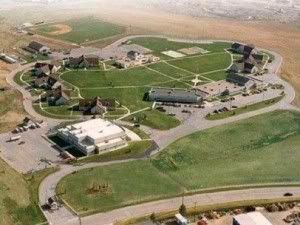
"Sit down," he squawked in a loud, high pitched, galling voice that sounded like a cross between a buzzard and an old cowboy. He continued to make it very clear that I was at his mercy. He told me who he was - politically - and the influence he had. If I ever wanted to leave I was to do what he said. "How old are you?"

"Fifteen," I mumbled.

"Three years might not be enough for you. I can have a judge order you to be here until you are 21," he croaked. With that he sent me off to be "changed and put on work crew."

I was led down a long hall of doors with nameplates. I had no clue what kind of place this was. I didn't see any cows or horses...no sign of what I thought a "ranch" would resemble. Paul took me into a small room that was no bigger than a broom closet, which was stacked to the ceiling with three colors of cloth, blue, green and brown. There were green t-shirts, blue t-shirts, and blue jeans.

There were also brown army wool blankets, and I remember thinking that I didn't want to sleep under such a coarse covering before I was told to "put it on." I was told to wrap a thick, itchy blanket around my waist like a towel and wear it like a dress.

I was then given a "leash" made of climbing rope and what I think was a square knot to tie around my waist.

I had never imagined being tethered and walked like a dog, but here I was, being walked like a dog towards a cluster of about 12 other boys. They were lined up facing a wall while two large men in red sweatshirts watched them from a couple of chairs off to the side.

Some of the boys had camouflage pants on, a few others wore dresses. I wondered how long I was to be in this blanket dress. I was later told that it was so I wouldn't run away - and they were right - I literally could not run in this humiliating getup. I could barely get a full stride walking.

That's when I saw Brent - or 'Captain America,' as he was called disparagingly - for the first time. My leash was handed off to him, but he told me to wrap it around my waist and go join the group of young men who were standing with their noses touching the wall, all spread out about arms length from each other.

I turned to the boy who was standing to my right and asked him how long he had been here, but before I could get my question all the way out, my forehead careened into the carpeted wall in front of me. A sharp pain stabbed the back of my head, and suddenly bad breath filled my nostrils. "Are you talking on my work crew, boy?" a red-shirted man screamed at me.

My head was ringing. I was still trying to piece together what had just happened when I looked behind me and massaged the pain in my head. Suddenly my legs fell out from underneath me and I was on my back.

He had just slammed my forehead into the wall, and now he had put his foot behind mine and pushed me, sending me to the floor flat on my back.

He stood over me and bawled, "Don't look at me. Don't look around. Don't you MOVE without permission! You don't do anything without permission! If you talk, I think you are talking about running away, and I will restrain you. Do you understand?" I nodded. I knew then that I had to get out of this place. I wasn't going to last here.

It was only my second week on work crew when Neil Westwood refused to turn his back to Brent and place his nose on the wall, which is what the command "face the wall" plainly meant. It was a Mexican standoff for a few moments. Stunningly it seemed like Brent was going to let Neil get his way. I had never seen an older boy in a pissing contest with a staff member before. The younger kids refused commands, but they were always quickly thumped into docility.

Neil was a big kid, a lot bigger than me - probably 230 pounds or so, and over six-feet tall, but dispelled any image of toughness with his glasses, disproportionately small arms, and frizzy hairdo. Neil was as obnoxious as he was an easy target, but I still can't believe that no one reacted when Brent stood up in a flash of rage and chucked a full, unopened gallon of milk at Neil's face from about five feet away, crumbling him to a pitiful puddle of tears, blood, and non-fat milk.

The work crew was depraved. When they didn't have us facing the wall for hours at a time we were digging ditches with spoons, only to fill them back in again.

We made huge piles of heavy rocks taken from the field, the field that both surrounded and contained us, only to be told to move the massive mound to another location. They worked us in ways redolent of Stalin's gulags.

There was an agonizing week of all-day sod laying - with bits of mud and grass sticking to the inside of my wool dress - in preparation for some ceremony the work crew boys weren't privy to. The Scarecrow Festival was even worse. We worked for weeks from eight in the morning till eight at night in preparation and to take down that contrived fall carnival/ fundraiser. Boys wished for death. There was also a dry-cleaning service that they operated somewhere in town, which was supposedly much better than any job on campus - even kitchen duty.

Getting off from work crew meant school during the day, and considerably less work. Some sadist there created a t-shirt caste system that involved wearing either a blue t-shirt or green t-shirt. "Blue shirts" could talk, receive letters (which were opened and read first), talk to their parents, and possibly go off campus.

"Green shirts" were allowed into school, but that was about it. No speaking, sitting, or anything but working or reading LDS literature. A "green shirt" was forced to read the Book of Mormon, in particular the first 22 chapters. We were interviewed by one of the four full-time Mormon missionaries that worked there and had to paraphrase all of "First Nephi" before receiving a blue t-shirt. What good derives from reading the Book of Mormon under duress is anyone's guess, but I did it. I had to.

I had to go to church and seminary too.

It turns out that any form of decadence - smoking a little grass, telling your math teacher to sit on it, being gay or bi-curious, sexually assaulting a family member or young girl - is curable by a little hard work, tough love, and Mormon doctrine. Boys with "sexual issues" are housed together in what could only be some cruel showing of satire.

They were constantly being caught jerking each other off onto each other, or, more tragically, assaulting younger boys. Whatever it was, they would be shoved into blankets and thrown on work crew. On Tuesday night they would meet with all the boys with sexual issues and provide remedies like IcyHot on the penis to stifle homosexual urges.

I was kept there until they couldn't keep me any longer, and on my 18th birthday I walked out the front doors into a cold October morning with nowhere to go and nothing but my freedom. If I didn't experience it myself I would not believe a place like this exists. A Mormon gulag.

How do they get away with all of the abuse? The forced religion, the stifling of freedom of speech? Was it legal to prevent us from reporting abuse to authorities, or to restrain us with ropes, wool blankets, and duct tape? Is it legal to force young boys to talk about masturbation with Mormon clergy and missionaries? How does all of this go unnoticed? We were young and naive and didn't know that most of what they did to us was illegal. Buttars was famous for telling us that we had only three rights: food, safety, and shelter. They failed to even live up to those standards.

Besides being callow, we hardly had the chance to report any abuse. They instruct parents to ignore any claims of abuse from their children. They call any complaints from children a manipulation tool - "fear factor" - and instruct parents to be wary of the "tactic" they say they encounter most.

There were also no phones to call the police. No nurses or medical examiners to talk to. No government authorities to check in on us. Incongruously, this Orwellian facility desperately needs government oversight.

Sen. Buttars said it all when he told a reporter, "What sets us apart is that we're the only residential treatment facility that doesn't seek or accept government funding. If we did, they'd control us."

This article was found at:

http://www.pamshouseblend.com/showDiary.do?diaryId=8920

2 Jan 2009

Extradition in ritual abuse case held up by questions over Israel's jurisdiction

The Jerusalem Post - January 1, 2009

y ETGAR LEFKOVITS

A six-month long legal battle over the extradition of the suspected ringleader in one of the worst child abuse cases in Israeli history has taken an unexpected turn after a Brazilian court has asked Israel for clarifications about its judicial authority in the West Bank settlement where the suspect lives, Israeli officials said Thursday.

The unusual political twist in the case of "Rabbi" Elior Chen, 28, who is under arrest in Brazil, came after his defense team claimed that Israel has no legal jurisdiction to demand his extradition since he lives in a West Bank settlement that is not within the judicial authority of the State of Israel.

Chen, a resident of Beitar Ilit, was apprehended by Brazilian police on a residential street in Sao Paolo in June after fleeing Israel when the grisly abuse case first broke last year.

His extradition is now pending approval of the Brazilian Supreme Court. However, a partial decision to grant the extradition request - which Chen is fighting - has now been temporarily stymied by a political dispute over Israel's legal jurisdiction over the West Bank.

"This court unanimously decided to convert the judgment into a measure to determine...about the jurisdictional competence of the State of Israel on the criminal facts occurred in the territory allegedly administered by the National Palestinian Authority," a recent Brazilian court decision stated."This territory is nowadays occupied by the State of Israel," the court added.

The Brazilian court asked Israel's legal department to respond to the issue by February 12.

The Justice Ministry said Thursday that Israel had the right to press criminal charges and try Elior Chen for the allegations against him which were committed, among other places, in Beitar Ilit.

The Ministry said in a written response that it's international department was currently preparing a detailed legal response which it will be presenting to the Brazilian authorities in order to press ahead with Chen's extradition process to Israel.

"It is truly amazing that a settler that lives in the territories argues that Israel does not have legal authority over his settlement only in order to prevent his extradition," said an Israeli official involved in the case.

At the same time, the court has previously turned down a defense request to release Chen on bail pending the outcome of the extradition hearing.

An Israeli attorney representing Chen abroad on Thursday lambasted the State's interference in the legal proceedings in Brazil which have been attended by an Israeli consular official.

"The presence of a consular official in the discussion is state interference in legal measures which discriminate against other Israeli prisoners abroad," said the lawyer, Mordechai M. Tzivin.

He added that the Justice Ministry's position over Israel's jurisdiction on the West Bank was not in synch with the Israeli government's stated readiness to create a Palestinian state on much of the West Bank.

Chen, a resident of Beitar Ilit, was apprehended by Brazilian police on a residential street in Sao Paolo in June after fleeing Israel when the abuse case broke.

Israel and Brazil do not have an extradition treaty but law enforcement officials have been working hand in hand in the abuse case since an international warrant for Chen's arrest was issued in April.

Chen and his followers are suspected of severely abusing two children, aged 3 and 4, who were savagely and systematically beaten with hammers, knives and other instruments for months until the younger child lost consciousness in March.

They are also suspected of the severe abuse of other children in the family.

The 3-year-old suffered permanent brain damage as a result of the systematic and brutal abuse he suffered at the hands of his mother and her companions, and is expected to remain in a vegetative state for the rest of his life.

In an effort to avoid arrest, Chen had fled the country just as police uncovered the abuse case, traveling to Brazil via Canada with his own family.

He turned himself in to Brazilian police on June 3 only in order not to besmirch the local Jewish community who were getting bad press as a result of the case, his lawyer said.

Five people, including the children's mother, have already been indicted in the grisly Jerusalem abuse case.

The chilling charge sheet in the gruesome child abuse case recounts that the mother allegedly forced her children to eat feces, locked them in a suitcase for three days - letting them out only for brief periods of time - repeatedly beat, whipped, and shook them, burnt their hands with a lighter and a heater, and gave them freezing showers.

The abusive mother and 'educators' are also suspected of pouring salt on the burn wounds of the child, stuffing his mouth with a skullcap and sealing his mouth with masking tape, and giving the children alcoholic drinks until they vomited.

As he awaits his extradition proceeding in a small Brazilian prison, Chen is receiving kosher food from a catering company and has been allowed to have phylacteries in his jail cell.

This article was found at:

http://www.jpost.com/servlet/Satellite?pagename=JPost/JPArticle/ShowFull&cid=1230733138126