Showing posts with label Branch Davidian. Show all posts

7 Oct 2008

Surviving Waco

BBC - October 7, 2008

by Jon Manel

[extended audio interview below]

There are certain events which have such an impact on the world that they become known simply by the name of the place where they happen. Waco is one of them.
The city in Texas is synonymous with the siege at a ranch on its outskirts, which took place over 51 days in 1993.
Waco was, of course, a tragedy - more than 80 people, including many children, lost their lives. It was also an extraordinary news event.
Waco
The world's media watched as fire swept through the Waco compound
It centred around a religious cult called the Branch Davidians and its leader David Koresh.
First, there was the botched raid by federal officials, who said they were looking for illegal firearms. Then there was the 51 day stand-off and, finally, there was the huge fire, which destroyed the property.
Before the fire
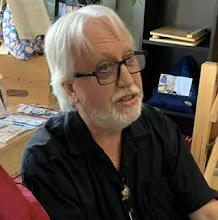
One of the Branch Davidians who survived was a British man called Livingstone Fagan, from Nottingham.
Along with other Branch Davidians, he was accused of murder but eventually acquitted.
He was sentenced to 40 years in prison for charges relating to voluntary manslaughter and a firearms offence, allegations he still denies.
After spending more than 14 years in prison, he has returned to Britain.

David Koresh
Cult leader David Koresh believed he had the gift of prophecy
Mr Fagan met David Koresh five years before the siege, when Koresh visited Britain.
At the time, Mr Fagan was studying theology. He was invited to come to America so he did, "just to hear a little more of what he was about and what the Waco Community was about".
Mr Fagan says he remains a Branch Davidian to this day and says he believes what happened at Waco was prophesised in the Book of Revelation in the New Testament.
"That was our home. The government had no right in our thinking and as far as the constitution in America was concerned to come at us [in] the way they did and then demand that we come because of what they started," he says.
Alternative witness

WACO SIEGE
Approximately 77 cult members, including cult leader David Koresh, died in the fire that ended the Waco siege on 19 April 1993
The siege started two months earlier when agents from the US Bureau of Alcohol, Tobacco and Firearms (ATF) attempted to arrest Koresh on firearms charges
In 2000 a government-appointed investigator cleared the FBI of any blame in starting the fire
When the siege happened, Mr Fagan says he was in the ranch with his mother, his wife and his two young children.
When we met in his Nottingham flat, I told him that I understood that his children had been "allowed to leave". He did not like the phrase.
"I don't want to use that term allowed to leave. Reluctantly, some of the children left the building. This was an act on our part to find a way of finding a settlement to all of this."
Mr Fagan also left before the end of the siege.
"Given the evidence that existed there, there was a sense that we may all be killed and the government may attempt to sell this to the public as some kind of suicide, which in fact they tried to, in order to cover their tracks," he says.

"So, there was a feeling that there needed to be some people alive that would somehow be able give an alternative witness to what really went on."
His mother and wife remained in the ranch and died in the fire. He describes them as "martyrs".
Instructed by God
Mr Fagan dismisses the results of the official Special Counsel investigation into what happened, which cleared the US government of all blame. He says his fellow Branch Davidians were murdered and it definitely was not "mass suicide".
He compares what happened at Waco to the crucifixion and likens David Koresh to Christ. He also says Waco is not over in terms of what he calls "the prophetic dimension".
"There is what we refer to as the Sixth Seal in the Book of Revelation, Chapter 6. There is an event that is to occur.

AFT agents at the Waco seige
Four ATF Agents were killed in the gun battle at the beginning of the siege
"You are going to see something supernatural taking place over there in Jerusalem. It relates to the Mount of Olives. It's going to split. It'll become a wide valley, then it'll be lifted up. This light will appear on it," he says.
He claims this will be the "end of the world as we know it". He brushes off suggestions that people might think he is crazy.
"When they were telling you the world was round back then, when people believed it was flat. Didn't they say they were mad, they were crazy?"
Livingstone Fagan claims he is not the only Branch Davidian now living in Britain. He says there are a small number of others too.
And as for why the community he was part of in Waco in 1993 required firearms, he says they needed them to defend themselves and that they were instructed to have them for that purpose by God.
This article was found at:
http://news.bbc.co.uk/today/hi/today/newsid_7654000/
7654418.stm


RELATED ARTICLES ON THIS BLOG

Stairway to Heaven: Treating children in the crosshairs of trauma


Five pregnant children is no small deal


Texas agency under magnifying glass over sect raid


Lessons From Waco: What Happens to Kids?


Cult youths conditioned to deceive outsiders


28 Jun 2008

Why does sex play such a large role for fringe religious sects?

The Kansas City Star - June 27, 2008

By KIMBERLY WINSTON | Religion News Service


What is it with sects and sex?

The Texas probe into allegations of child abuse at a polygamous compound started with an anonymous phone call about underage girls having sex with adult men. Reports circulated of rumpled bed linens inside the sect’s glistening temple.

Its imprisoned leader, Warren Jeffs, reportedly has dozens of wives and would grant and deny wives to his male followers depending on their perceived worthiness. Without multiple wives, he taught, they could never achieve salvation.

Yet Jeffs isn’t the first sect figure to come under legal scrutiny for sexual practices that outsiders might consider unusual, immoral or even abhorrent. Indeed, many new religious movements — NRMs in scholar-speak — are distinguished not only by their unconventional beliefs but also by the sexual proclivities of their male leaders.

All of which raises the question: Why do people join or remain members of a group that practices unusual sexual behaviors? And what’s more, what kind of sexual power do the leaders of NRMs hold over their followers?

“Every group has its own dynamics and diversity,” said Catherine Wessinger, an expert in NRMs at Loyola University in New Orleans. “A leader can use sexual activity to diminish ties between followers and direct their affections and emotions. But the thing to remember is that no one has that charisma unless the people behind him or her believe that he or she has it.”

Often, the leader’s followers believe that God or other divine beings communicate through the leader, something that can endow the leader’s sexual relations with a special holiness or sanctity, Wessinger said.

In the case of the Branch Davidians, sex with prophet David Koresh was seen as normal and desirable, even when it involved girls as young as 14. Similarly, in the Peoples Temple, whose members committed mass suicide in the Guyana jungle in 1978, sex with leader Jim Jones was sometimes a reward for both men and women, married and unmarried.

“You would think that if you stole someone’s wife that would (tick) them off,” said veteran religion writer Don Lattin, who has written several books on NRMs, including Jesus Freaks, about an evangelical sect known as the Family.

“But in these groups the opposite often happens. The husband goes along with it and is controlled by it because it is all linked with his eternal salvation. By sharing his wife he is getting closer to the central power — the guru or prophet.”

In the case of Jeffs’ Fundamentalist Church of Jesus Christ of Latter Day Saints (FLDS), his one-man power to arrange (or undo) marriages between young girls and older men lent a sanctity to their union, scholars say.

Yet while groups like Jeffs’ may garner headlines, they’re neither new nor unusual. American history has seen the rise — and often the decline — of NRMs, many with unusual sexual attitudes:

•In the late 1700s, the Shakers established a celibate community in upstate New York. They eventually died out because of a lack of new members.

•The Oneida Community, a utopian commune established in the 1840s in upstate New York, held that sex with someone “spiritually higher” advanced one’s spirituality.

•Joseph Smith, founder of Mormonism, proclaimed polygamy a divinely revealed concept, and it remained so until the mainstream Mormon Church disavowed it in 1890. That initiated the rift that would lead to the founding of the FLDS church.

•David Berg, the charismatic founder of the Family, reinterpreted Jesus’ teachings on love as sanctifying multiple sexual partners, including underage girls and boys. The group renounced sex with minors in 1986.

Wessinger also links “millennial” NRMs — those that focus on a coming end of the world, like the FLDS sect — with unusual sexual attitudes. Such groups, she says, often enact relationships they believe will exist in the afterlife.

That’s what prompted members of Heaven’s Gate, a millennial sect that committed mass suicide in San Diego in 1997, to practice celibacy and male castration — they believed there would be no sexual activity or relationships in their longed-for afterlife.

“I think it is absolutely connected, because in a millennial movement there is a belief that there is going to be an imminent transition to a collective salvation in which relationships will be completely transformed,” Wessinger said. “They are anticipating the way they think relationships will be after their collective salvation.”

Many spiritual experiences involve the body — Pentecostals speaking in tongues, fire-walking Hindus and Buddhists or even the bleeding wounds (stigmata) attributed to some Catholic mystics and saints. It isn’t such a leap, then, for NRMs to marry the sexual with the spiritual.

“Intense religious experiences often involve the body,” Lattin said. “It is a spiritual ecstasy that can be like a sexual ecstasy. You have that physical experience of body which is very real and very integral to religious experience.”

Sarah Pike, a religious studies professor at California State University-Chico, says there may be something distinctly American about NRMs and sex.

“I think it has something to do with the fact that from the very beginning Americans have had this sense that they are in the process of creating a new society and new governance,” Pike said. “It seems there is a willingness to experiment.”

But other scholars disagree, saying unusual sexual activities were once part of many mainstream religions. Early Christians, led by St. Paul, wrote of celibacy as a means to holiness — an outrageous idea to ancient societies that placed high value on procreation. “Paul writes long passages about being celibate, like he is, because in the kingdom of heaven there (will) be no marrying or giving in marriage,” Wessinger said.

Timothy Miller, a professor of religious studies at the University of Kansas, says he sees very little difference between the sexual activity in NRMs and other, more traditional religious groups.

“I think it happens in regular religious movements,” he said, citing the recent sexual abuse scandals in the Hare Krishna movement and the Catholic Church, among others. “You see the same situation — someone with authority and a lot of trust has the same weaknesses and desires as anyone else. These people are human. I think that is the bottom line.”

This article was found at:

http://www.kansascity.com/238/story/681989.html

RELATED ARTICLES

Exposing the abuses and frauds of cults makes advocate a target for regular legal and physical threats

11 Jun 2008

Five pregnant children is no small deal

Seattle Post-Intelligencer - June 10, 2008

Opinion
by John Young | Waco Tribune-Herald
WACO, Texas -- Parents of the polygamist sect in Eldorado, Texas, have their children back, but they aren't all in the clear. Until the DNA speaks, it's not clear who's a parent and who, as a child victim, became a parent.
Criminal charges may spring from what remains in play after the Texas Supreme Court ruled Child Protective Services overreacted when it took 440 FLDS children into custody.
If this was a certifiable overreach, as two appellate courts say, I gladly vote for this over the chain of reactions in 1993 which left charred corpses on a blackened patch of prairie outside Waco. The initial concerns in that debacle were the same.
In that case, to prosecute something that started out as a child abuse case, officials chose federal SWAT teams in cattle trailers over caseworkers and deputies.
The feds opted for flash-bang grenades over diplomacy. They chose a big production over a quiet arrest of David Koresh away from the compound on the many occasions in Waco when he was being a guitar-loving messiah about town.
In the resulting shoot-out, 51-day standoff and horrific end by fire, 85 people died.
The DNA ultimately would speak to crimes that demanded someone's attention. Koresh fathered 13 children who died in the fire. Some were the result of his bedding minors.
Throughout those events, in which Waco became the media center of the universe, I got to sample a bizarre night-and-day divide of letters to the editor from two groups of outraged people.
On the one hand were the locals who wrote, "Support law enforcement." On the other hand were faxes from afar (before most of us were e-mailing) denouncing law enforcement as "jackbooted Nazi thugs."
In either case, the observers were blind to the culpability of those with whom their sympathies lay. Both the feds and the Branch Davidians were egregiously, horrifically at fault.
Now, with the case in Eldorado, I've seen mass e-mailed letters to newspapers like ours flinging charges at Texas for Gestapo tactics and for pursuing "fictional abuse." We've also heard from a "polygamy rights" group.
Breathe deeply. The state's claims -- that 31 teenage girls were impregnated -- were way off. It turns out that all but five were legal adults.
This may sound to you like an exoneration of the FLDS. It may also bring to one's mind the phrase "a little bit pregnant." Five pregnant children is no small deal.
Sect members say all was consensual. Texas law says, "If she's a minor, there's no such thing."
FLDS members now say they no longer will countenance marriages involving minors, a confession of something forbidden in the first place. Once again, feel free to denounce CPS for overreaching and exaggerating. I vote for child advocates who move their feet when clear suspicions present themselves.
Due process has prevailed thus far in this child abuse investigation. It had no such opportunity in 1993. The investigation continues in Eldorado, as it should. In the incident that became known as "Waco," all the truth that was left about the crimes that first alerted investigators was in the DNA.
This article was found at:

http://seattlepi.nwsource.com/opinion/
366478_youngonline11.html

2 Jun 2008

Texas agency under magnifying glass over sect raid

Associated Press - June 1, 2008

by Michelle Roberts

SAN ANGELO, Texas (AP) -- For nearly two months, Texas child welfare officials had insisted conditions at a
polygamist group's ranch were so abusive that none of its members should be allowed to keep their children.
Now, however, one of the largest custody cases in U.S. history is unraveling, and some are looking for what went wrong when the state raided the Yearning For Zion Ranch and removed more than 400 children.
Since the state Supreme Court ruled that the Texas Department of Child Protective Services overreached when it swept the children into foster care, agency officials have been unwilling to discuss the case, their strategy or what went wrong.
However, some close to the debacle say the operation was doomed from the start by a series of missteps.
First is the oddity of a religious sect the agency knew little about, exacerbating the inherent perils of balancing parents' rights and child safety. Then there were the abuse allegations, starting with a mysterious telephone call and echoed by disgruntled former members, seemingly accepted at face value.
And an ill-fated 1992 brush with another religious sect -- which led to the fiery deaths of 21 children at the Branch Davidian compound near Waco -- still lingers on the agency's collective conscience.
''It's difficult to know whether, in fact, they screwed it up,'' said Linda Spears, vice president of the Child Welfare League of America, a national collection of nonprofits that aid abused and neglected children. ''It's the 20/20 hindsight thing.''
Folks in Schleicher County, a dusty patch near the middle of Texas, had been at least curious, if not suspicious, of members of the Fundamentalist Church of Jesus Christ of Latter Day Saints, a breakaway from the Mormon church whose members believe polygamy earns glorification in heaven.
Members of the group revered leader Warren Jeffs as a prophet. Since the start of the group's Texas ranch, he has been convicted in Utah as an accomplice to rape and is jail in Arizona awaiting trial on separate charges.
Sheriff David Doran cultivated a confidential informant to monitor the group's activities, and former FLDS members recounted abuse and forced marriages to anyone who would listen.
Investigators ''listened to a lot of misinformation and allowed themselves to be kind of captivated by these anti-FLDS people,'' said FLDS spokesman Rod Parker.
When someone purporting to be a pregnant 16-year-old called a domestic abuse hot line claiming her middle-aged husband beat her, authorities went in with Child Protective Services workers on April 3. But the calls may have been a hoax.
''We had no choice but to treat those calls as credible. If we had not treated them as credible and something bad happened, people would be very upset,'' said Tela Mange, a spokeswoman for the Department of Public Safety, which is still investigating possible sex abuse at the ranch in addition to the origin of the hot line calls.
Children and mothers were taken away from the ranch because CPS workers thought it would be better to interview them at a neutral location, something that wasn't done in the last high-profile brush the agency had with a religious sect -- the Branch Davidians.
CPS workers were confused about names, ages, and relationships of the children and adults in the complicated group marriages of the FLDS. The agency said at the time it believed sect members were deliberately misleading investigators about the names, ages and parentage of the children.
Although caseworkers said when they took custody of all the children that the sect was forcing underage girls into marriage and sex and training boys to be adult perpetrators, only a few dozen of the children swept into custody turned out to be teenage girls, and only a handful had children or were pregnant. Of 31 mothers CPS said were minors, at least half turned out to be adults.
David Schenck, an attorney for some of the mothers, said CPS workers were confronted with a decision when they arrived at the ranch: identify all the men who might be suspected abusers or grab all the children.
''They were interested in taking care of kids, but the problem is they took on more than the evidence is going to support,'' he said.
Parker called the agency ''heavy-handed.'' A state appeals court essentially agreed, saying the state failed to show that any more than five of the teenage girls were being sexually abused, and had offered no evidence of sexual or physical abuse against the other children. The Texas Supreme Court agreed in a ruling issued Thursday.
Spears, a caseworker-turned-advocate, said that despite the high-profile nature of the FLDS case, the dilemma faced by CPS is little different than in most removal cases.
''At the time you walk in, you have very little information even in the best cases,'' she said, noting the snap risk assessments caseworkers are often asked to make.
The second-guessing, too, is typical. CPS also was criticized for its handling of the Branch Davidians cult at its ranch compound outside Waco. Allegations of abuse at the Waco ranch had swirled for years, but interviews with children at the compound produced no outcry of abuse and CPS closed its investigation in 1992.
A year later, federal agents raided the fortified compound in a weapons investigation. Fire broke out and the 21 children died.
Spears said agencies worry about making wrong calls and seeing harm come to children. Decision-making often swings in reaction to criticism of previous cases or child deaths.
''It swings back and forth,'' she said. ''There's no exact science being practiced here.''
This article was found at:
http://ap.google.com/article/
ALeqM5iIdMpRHjN4hpNKBhfYyAsR4D
Do4QD910QM7G5

9 May 2008

Sects are all about sex

Batesville Herald Tribune - May 8, 2008

by Stephen Dick |THE HERALD BULLETIN (ANDERSON, Ind.)
The raid on the Yearning for Zion ranch in Eldorado, Texas, that liberated 400 children from a life of abuse a few weeks ago was just the latest in a sorry history of messianic cults in the land of the free.
The sect’s leader, Warren Jeffs, is in prison for raping children. With him gone there was apparently no leader, but also no shortage of men to keep the outfit and its philosophy going. It was a 911 call that brought police to the compound. Presumably made by a 16-year-old girl in the compound, no one has identified the caller and some speculate the call might have been bogus. Still, the call accomplished what it intended — to bust up a sect where men enjoyed the sexual services of numerous women and children, including boys.
The compound was part of the Fundamentalist Church of Jesus Christ of Latter Day Saints, an offshoot of Mormonism that believes in polygamy and practices it. Mormons outlawed polygamy more than century ago, but radical sects, like the one run by Jeffs, kept it going because the men loved the power and variety of partners.
All of these sects have one thing in common: sex. That’s all they are about, and the leaders use religion and fear to keep the women and children in place. Think of David Koresh who ran the Branch Davidians in Waco, Texas. He was using the Lord to gain as many sexual partners as possible. He read in the Bible about a woman with no breasts and concluded he had to have sex with a 12-year-old girl.
Jim Jones, the charismatic psychotic who led 900 people to their deaths, used sexual humiliation to keep his followers in line. The trials of the male residents of Pitcairn Island in the South Pacific, most of them descended from Fletcher Christian who led the mutiny on the HMS Bounty in 1789, resulted in rape convictions. The Pitcairn way of life was apparently one long epsiode of child abuse. There was no religion involved on the island, just isolation and patriarchy.
In his book “Rogue Messiahs,” Colin Wilson tells about the phenomenon of religious nuts who declare themselves to be the son of God or some such nonsense. These people have unusual powers to persuade and will only pick weak people who will back their psychosis with unlimited adulation.
They have sex with numerous partners but get incensed if other men in the sect begin straying. They are into absolute control. It makes one wonder what kind of person would follow someone like that, give in to his every demand and obey his every command. It could be concluded that anyone who enters into a sect or cult, from the leader on down, has a dysfunctional personality. The children, however, don’t even have time to develop a personality before they are degraded and force-fed the dogma that will keep them in line.
Here religion is the key. Messiahs have to convince their followers that they have insight into the ways of God. Once that’s accomplished, through trickery, the false messiahs can get the followers to do anything. Here’s the most valuable lesson I ever taught my son about religion: Find even the most religious person, one who quotes the Bible at length, one with most saint-like qualities, and realize that he or she doesn’t know anymore about God than anyone else. There is no human prophet who will give people a shortcut to salvation.
When religion becomes an obsession, however, there are always these phony messiahs to capitalize on people’s fears.
Many of the teen girls rescued in Texas were pregnant. The mothers were dressed like bit players out of “Gunsmoke.” Texas did the right thing taking these children and women away from sexual slavery at the hands of self-deluded leaders.
Lawyers have descended upon Eldorado like locusts to try and get the children reunited with their mothers, many of whom returned to the compound because it’s the only life they know, the only life, they figure, that God would want them to have. Photos of weeping mothers and children shouldn’t deter Texas from trying to give these children a decent life.
I’m well aware that we have freedom of religion in this country. We can worship as we see fit, but there’s a difference between worshipping and committing illegal acts in the name of the Lord. Christianity, like most religions, treats women and children as second-class citizens, but sects take that attitude to an even darker level.
Two of the reasons these messianic charlatans are rarely exposed are religion and family, two areas that states fear to tread. But once people realize that religious sects are simply an excuse to prop up delusional power and insatiable pedophilia the sooner the innocent can be set free.
Just this week, Wayne Bent, 66, was arrested in New Mexico on charges of felony sex crimes against children. He led the Lord of Our Righteousness Church and claimed he was, you guessed it, the Messiah.
This article was found at:
http://www.batesvilleheraldtribune.com/statenews/
cnhinsall_story_129105305.html

19 Apr 2008

Lessons From Waco: What Happens to Kids?

ABC News - April 18, 2008


Cult Expert Says Waco and FLDS Kids Share Some of Same Problems

By CHRIS CUOMO, DENNIS MURRAY and JONANN BRADY


Fifteen years ago this week, the Branch Davidian compound in Waco, Texas, went up in flames, ending a tense 51-day standoff between the religious cult and the FBI.

David Koresh, the group's charismatic leader, and 70 others, including 20 children, died in the inferno.

There are some obvious parallels between the polygamist Branch Davidians and the Fundamentalist Church of Jesus Christ Latter Day Saints members whose Texas compound was recently raided by government officials.

Both sought refuge in remote parts of Texas, about 200 miles apart. Both involved polygamy and accusations of child brides. And both sects have children who will have to contend with the trauma of having the only way of life they've ever known invaded and upended.

Rick Ross, an expert on cults who has worked with former Branch Davidians and Fundamentalist Church of Jesus Christ of Latter Day Saints members, said that children who come out of closed-off societies or cultlike groups face many of the same problems. But he says the current case in Texas and the fate of the FLDS children poses unprecedented and complex problems.

"I've worked with a number of children removed by the courts from cults, and I've never seen a case like this," Ross told "Good Morning America."

"These children have no support system on the outside. Everyone they know, they love, everything is tied up in that and that group. The Texas authorities have a tough road ahead," he said.
Growing Up With Koresh

Sky Okimoto was nearly 4 when his mother, Koresh's sixth wife, left the Waco compound. Today he is a 19-year-old college student and still struggling with the confusion and sadness, and the fading memories of Waco.

"Being the son of David Koresh, yes it was pretty hard," Sky told "GMA." "I felt like something was wrong with me because so many people hated my father."

He continued, "I was angry when I was young because I had just lost my father. It was only until the eighth grade really when I decided to be a happy person again."

The Waco Branch Davidians, a splinter group of the Seventh-Day Adventist church, believed they were living in apocalyptic times. Their lifestyle was extremely austere, based on strict discipline, physical labor and intense Bible study.

Koresh, the group's self-proclaimed messiah, took multiple wives with whom he had at least 14 children. Koresh was also accused of abusing underage girls -- one of his wives was 14 years old and another was 12.

After beginning to question Koresh's doctrine, Okimoto's mom, Dana, left the group just months before the standoff with the government.

Still, she said watching her former home go up in flames was horrifying.

"That was probably the worst day of my life, because those were my friends, those were my family," she said in an ABC News "Primetime" interview in 2003. "What made it even harder for me was knowing I would have been in there."

Dana Okimoto told "GMA" that she has avoided watching TV coverage of the FLDS case because of the similarities she sees between the two groups and the emotions it brings back.

Sky Okimoto, who is also a budding actor, says that grappling with mixed feelings about his father has been difficult.

"I'm pretty much at peace with the fact that he existed," he said. "Sometimes I look up to him because of his charisma. Other times I think he was crazy."
Tough Road Ahead for FLDS Kids

Ross says that the Okimotos were lucky in many ways.

"Sky came out at a very young age and was very fortunate his mother had the critical thinking to leave the compound and he had something to go out to. They had extended family. They could build a life."

But the FLDS children and mothers are "like visitors from another planet" who know no other way of life, Ross said

"It's a group that's almost 100 years old. It's a group that represents generations of abuse, and the mothers that we're seeing on television were literally born into the group as were their mothers and grandmothers," he said.

"The children that we're seeing in CPS [Child Protective Services] custody, they have no one to go out to and their mothers completely endorse the group and continued abuse."

Ross said, though, that the state did the right thing in taking the children from their mothers; if the state had not, it would be tantamount to letting sexual abuse continue indefinitely.

The key to integrating the children into mainstream society, Ross said, is "communication and the fact that they've removed them from the controlled environment and cut off their information from the group itself."

"If they can gain their trust and move forward, and they have good people in Texas, I think they can make headway," he said.

Dana Okimoto says Sky is an example of kids' ability to bounce back.

"There are times he has been very, very angry." she said of Sky. "And other times where I learned about the resliency of children."


Copyright © 2008 ABC News Internet Ventures

This article was found at:

http://www.abcnews.go.com/GMA/story?id=
4680793&page=1

11 Apr 2008

Cult youths conditioned to deceive outsiders

Houston Chronicle - April 10, 2008

Sect youths conditioned to deceive outsiders CPS challenge is to win trust, find truth, expert says

by Terri Langford

When the children came into the interview rooms, they were orderly and respectful. If asked to do something, they did it, without question or backtalk. But when they sat down to talk to authorities about life inside their expansive home out in the country, their stories became guarded, often layered with half-truths.
"When it came to responding to a question, the answers were purposely deceptive," Dr. Bruce Perry recalled of the behavior of the 21 Branch Davidian children released before the 51-day siege with authorities ended near Waco in a deadly fire in 1993.
Perry, a national expert on child trauma and children living in sects or cults, worked side by side with Texas Child Protective Services when the agency took the Branch Davidian children into custody.
Fifteen years later, the Houston-based psychiatrist finds himself working with CPS again, this time to advise nearly 300 caseworkers in West Texas about what they're up against with the 416 children taken from a fundamentalist sect: tough little soldiers for God trained since birth to protect their way of life.
"This is one of the most challenging situations you face in a child protective situation where you have children who are socialized into an abusive lifestyle, yet they feel it is normative," said Perry, a senior fellow of ChildTrauma Academy in Houston, a nonprofit that conducts research and provides services for mistreated children.

In an insulated world

The children taken from the Yearning For Zion Ranch in Eldorado are part of the Fundamentalist Church of Jesus Christ of Latter Day Saints, or FLDS, a group that believes in polygamy. What is known about the group, through those who have left, is that children are conditioned to protect their family against prying eyes and questions from outsiders.
"They have lived in a very insulated world," said Darrell Azar, spokesman for CPS' parent agency, Texas Department of Family and Protective Services.
The children could prove the toughest interview subjects yet for veteran CPS caseworkers, emboldened as they may be by an increase in staff and more money to investigate abuse cases more effectively.
A child who has lived in a restrictive community such as FLDS, where children are told they will risk their souls or be tortured by the mainstream world, can't help but develop a fear of outsiders, Perry and others say.
"They were told we were the evil people," recalled Bobby Gilliam, president of Methodist Children's Home in Waco, the foster care home that took in 20 of the 21 Branch Davidian children.
He remembers how the heart rates of the children were 30 percent to 40 percent higher than normal because of their anxiety. There also was a darkness about the children. All of them had lost a relative, either in the gunfight with federal agents or in the fire.
"They didn't grieve like normal kids," Gilliam said. He also recalled how he asked the other children why one girl, about 11 or 12, wore a Star of David. Without blinking an eye, they told him that was what cult leader David Koresh had young girls wear after he had chosen them to be his next wife.
"Their sense that something is wrong is so different that it really poses a challenge for the agency," Perry said.

Passive-aggressive

In the case of the children from Koresh's compound, most of them, particularly the older ones, had experience with the outside world and let down their guard faster.
But it was difficult to get them to trust the social workers, Gilliam and Perry said. It was a long time before they divulged details about their lives inside.
"Their behavior is what some might call passive-aggressive," Perry said. Sect children act cooperative but know how to dodge questions.
And that's something CPS already is finding out.
On television screens, the pictures of orderly and cooperative women dressed in long skirts leading their children quietly onto buses and away from the YFZ ranch have pulled at the nation's heartstrings.
But behind the scenes, at interview areas in San Angelo, the setting is somewhat different.
Many of the women have been giving different names every time they are asked. Some caseworkers are finding it tough to interview the children when the women — some of whom are not the child's birth mothers — are never far from the child. There is a sense among some caseworkers that the children are being told to be quiet and that in a few days everyone will be back home at the ranch.
"They eat together, they sleep together and they even go to the bathroom ... as a group," said one agency official, who asked not to be identified.
Also, there are no birth certificates to help identify so many children, and the women are seen often on cell phones, talking to the men still at the ranch and letting them know the state's every move.
Despite the obstacles, CPS, an agency used to tremendous pressure from lawmakers, families and the public at large, believes it is up to the task.
"They know what's at stake," the agency official said.
What's at stake is the credibility of the agency overhauled three years ago after highly publicized child deaths occurred in 2004 on CPS' watch.
In 2005, lawmakers approved $200 million in reforms that added 848 caseworkers, gave them high-tech tools such as laptops and digital cameras, increased pay, and created more specialized investigative jobs so that parents accused of child abuse couldn't disappear in the night. It was an attempt to curb a surging caseload that had workers juggling up to 50 child abuse cases a month.

A hearing coming up

CPS spokesman Patrick Crimmins said the move of nearly 1,000 staff to West Texas won't strain the system.
Perry believes the state can do it, but says CPS has much ground to cover before the April 17 hearing where it will tell the judge how much evidence it has collected so far to bolster the agency's case that child abuse occurred at the sect's ranch.
An affidavit released this week provided details of what prompted the government raid.
In it, CPS states how a 16-year-old girl at the ranch, the seventh wife to a man three times her age, began making cell phone calls to a women's shelter. She told workers that she was forced to become a wife and mother at 15, was beaten by her husband and feared for her life.
It was the teary near recantation the girl made in her last call March 30 that shows the agency what it's up against: a powerful collective that has trained its young to give up their comforts for the good of their society. CPS has not found the teen among the 416.
"At the conclusion of this conversation, she began crying and then stated that she is happy and fine and does not want to get into trouble and that everything she had previously said should be forgotten," the affidavit stated.
For CPS, their task will be arduous these next seven days.
"The normal sense of being accountable to authority that is present with children in our culture is not present in their culture," Perry said. "They don't view us as legitimate authority."
This article was found at:
http://www.chron.com/disp/story.mpl/life/
religion/5688909.html

4 Aug 2007

Stairway to Heaven: Treating children in the crosshairs of trauma

Psychotherapy Networker     April/March 2007

By Bruce Perry and Maia Szalavitz


Inside the Branch Davidian compound in Waco, Texas, children lived in a world of fear. Even babies were not immune: cult leader David Koresh believed that the wills of infants—some just eight months old—needed to be broken with strict physical discipline if they were to stay "in the light." Koresh was mercurial: one moment kind, attentive and nurturing, and the next, a prophet of rage. The Davidians, as the members of the Mount Carmel religious community were called, became exquisitely sensitive to his moods as they attempted to curry his favor and tried, often in vain, to stave off his vengeance.

With his volatile temper and fearsome anger, Koresh excelled at using irregular doses of extreme threat—alternating with kind, focused attention—to keep his followers off balance. He maintained an iron grip, controlling every aspect of life in the compound. He separated husband from wife, child from parent, friend from friend, undermining any relationship that could challenge his position as the most dominant, powerful force in each person's life. Koresh was the source of all insight, wisdom, love and power; he was the conduit to God, if not God himself on earth.

And he was a god who ruled by fear. Children (and sometimes even adults) were in constant fear of the physical attacks and public humiliation that could result from the tiniest error, like spilling milk. Punishment often involved being beaten bloody with a wooden paddle called "the helper." Davidian children also feared hunger: those who "misbehaved" could be deprived of food for days or put on a bland diet of only potatoes or bread. Sometimes, they would be isolated overnight. And, for the girls, there was knowledge that they would ultimately become a "Bride of David." In a unique form of sanctioned sexual abuse, girls as young as ten were groomed to become Koresh's sexual partners. A former member said Koresh once excitedly compared the heartbeats of the prepubescent girls he violated to those of hunted animals.

But perhaps the most pervasive fear that Koresh instilled was the fear of the "Babylonians": outsiders, government agents, nonbelievers. Koresh preached about and constantly prepared his community for the "final battle." The Branch Davidians, including children, were being readied for the imminent end of the world (hence Koresh's nickname for the compound, Ranch Apocalypse). This preparation involved military drills, interrupted sleep and one-on-one fighting. If the children did not want to participate or were not vicious enough in battle training, they were humiliated and sometimes beaten. Even the youngest members were taught how to handle guns. They were instructed in the most lethal suicide techniques with firearms, being told to aim for the "soft spot" in the back of the mouth if they faced capture by the "Babylonians." The rationale was that "unbelievers" would ultimately come to kill everyone. After this apocalyptic battle, however, members were promised that they would be reunited with their families in heaven and Koresh—God—would return to earth to smite his enemies.

I came to Texas in 1992 to become the vice chairman for research in the department of psychiatry at Baylor College of Medicine (BCM) in Houston. I also served as chief of psychiatry at Texas Children's Hospital (TCH) and director of the Trauma Recovery Program at the Houston Veterans Administration Medical Center (VAMC). My past experiences at a residential center had convinced me that we did not know enough about trauma and its effects on children's mental health. We did not know how trauma during development produced particular problems in particular children. The only way to figure this out, it seemed, was to closely study groups of children immediately after a traumatic event. Unfortunately, children were usually brought to us for help only years after they had suffered trauma, not right away.

It was to attempt to solve this problem that I, in coordination with BCM, TCH and VAMC, put together a "rapid response" Trauma Assessment Team. It was our hope that while helping children cope with acute traumas like shootings, car accidents, natural disasters and other life-threatening situations, we could learn what to expect from children in the immediate aftermath of a traumatic experience and how this related to any symptoms they might ultimately suffer. The children of Waco would provide one unfortunately apt sample to study.

On February 28, 1993, the "Babylonians" in the form of the Bureau of Alcohol, Tobacco and Firearms (BATF) came to the Branch Davidian compound to arrest David Koresh for firearms violations. He would not allow himself to be taken alive. Four BATF agents and at least six Branch Davidians were killed in the ensuing raid. The FBI and its hostage-negotiation team managed to secure the release of twenty-one children over the following three days. It was at this point that my team was brought in to help with what we thought would be the first wave of children from the compound.

I heard about the first raid on the Branch Davidian compound like most people did: from the news on television. Almost immediately, reporters began calling to ask me how the raid might affect the children. When I was questioned about what was being done to help those who had been removed from the compound, I replied almost off-handedly that I was sure the state was making sure they were properly cared for.

But just as soon as the words left my mouth, I realized that this was probably not true. Government agencies—especially the chronically underfunded and overburdened Child Protective Service (CPS) systems—rarely have concrete plans to deal with sudden influxes of large groups of children. Furthermore, chains of command between the federal, state and local agencies involved in law enforcement and CPS are often unclear in unusual, fast-moving crises like the Waco standoff.

As I thought more about this I felt pulled to see whether the expertise on childhood trauma that our Trauma Assessment Team had been developing could be helpful. I contacted several agencies but no one could tell me who was "in charge." Finally I reached the governor's office. Within a few hours I was called by the state office of CPS and was asked to come to Waco for what I thought would be a one-time consultation. That afternoon meeting turned into six weeks of one of the most difficult cases I have ever had.

When I arrived in Waco I found disarray, both in the official agencies responding to the crisis and in the care of the children. During the first few days, when the children were released, they were driven away from the compound in large tank-like vehicles. No matter what time of day or night it was when they came out, they were immediately interrogated by the FBI and the Texas Rangers, often for hours. The FBI had the best intentions; they wanted information quickly so that they could help defuse the situation at the Ranch and get more people out safely. But no one had thought through how overwhelming it would be for a child to be taken from his parents, put in a tank after witnessing a deadly raid on his home, driven to an armory and questioned at length by numerous armed, strange men.

It was only dumb luck that kept the Davidian children together after the first raid. Originally, Texas CPS had planned to place them in individual foster homes, but they could not find enough homes fast enough to take all of them. Keeping them together turned out to be one of the most therapeutic decisions made in their case. After what they had just experienced, ripping them from their peers and/or siblings would only have increased their distress.

Instead of foster homes the children were brought to a pleasant, campus-like setting, the Methodist Children's Home in Waco. There, they lived in a large cottage, initially guarded by two armed Texas Rangers. They were cared for by two rotating live-in couples, the "house mothers" and "house fathers."

In those early days the atmosphere of the cottage was chaotic. Officers from various law enforcement agencies would show up at any time, day or night, and pull aside particular girls or boys for interviews. There was no schedule to their daily life and no regularity to the people that they would see. One of the few things I knew for sure by then about traumatized children was that they need predictability, routine, a sense of control and stable relationships with supportive people. This was even more important than usual for the Davidian children: they were coming from a place where they had for years been kept in a state of alarm, led to expect catastrophe at any minute.

During my initial afternoon meeting with the key agencies involved, my advice boiled down to this: create consistency, routine and familiarity. That meant establishing order, setting up clear boundaries, improving cross-organizational communication and limiting the mental health staff to those who could regularly be there for the children. I also suggested that only those who had training in interviewing children be allowed to conduct the forensic interviews for the Rangers and the FBI. At the end of the meeting CPS asked me if I would be willing to lead in the coordination of these efforts. Later that day, after meeting with FBI agents, I was also asked to do the forensic interviews myself. At that point we still thought that the crisis would be over in days, so I agreed.

When I got to the cottage one of the Rangers stopped me at the door. He was tall and imposing in his hat, the archetype of Texas law enforcement. He was not impressed by this long-haired man in jeans claiming to be a psychiatrist who had come to help the children. Even after I had established that I was indeed Dr. Perry, he told me that I did not look like a doctor, and further, "Those kids don't need a shrink," he said. "All they need is a little love and to get as far away from here as possible."

Ultimately, this Ranger would turn out to be one of the most positive and healing figures in the children's lives for the weeks they stayed at the cottage. He was calm, good with children, and intuitively seemed to know how to provide a supportive but not intrusive presence. But right then, he was in my way. I said to him, "Okay, I'll tell you what. Do you know how to take a pulse?" I directed his attention to a young girl who was fast asleep on a nearby couch. I told him that if her pulse was less than 100, I would turn around and go home. The normal heart rate range for a child her age at rest is 70-90 beats per minute.

He bent down gently to pick up the girl's wrist, and within moments his face filled with anxiety. "Get a doctor," he said. "I am a doctor," I replied. "No, a real doctor," he said, "This child's pulse is 160."

After reassuring him that psychiatrists are physicians with standard medical training, I began to describe the physiological effects of trauma on children. In this case an elevated heart rate was likely a reflection of the girl's persistently activated stress-response system. The ranger understood the basics of the fight or flight response. I noted that the same hormones and neurotransmitters that flood the brain during a stressful event—adrenaline and noradrenaline—are also involved in regulating heart rate, which makes sense since changes in heart rate are needed to react to stress. The Ranger let me in.

The Davidian children had been released in small groups in the first three days following the February raid. They ranged in age from five months to twelve years old. Most were between four and eleven. They came from ten different families, and seventeen of the twenty-one were released with at least one sibling. Although some former members have disputed accounts of child abuse among the Davidians, there was never any doubt that the children had been traumatized, certainly by the raid on the compound, but also by their life beforehand.

These children did not feel as though they had just been liberated. Instead, because of what they had been taught about outsiders and because of the violence they had survived, they felt like hostages. They were more frightened of us now than they had been at home, not only because they were suddenly deprived of family and familiarity, but also because Koresh's predictions about an attack had come true. If he was right that the "unbelievers" had come for them, they figured, his assertion that we intended to kill them and their families was probably correct as well.

We immediately recognized that we had a group of children that had essentially been marinated in fear. The only way we could get them the help they needed was to apply our understanding of how fear affects the brain and then consequently changes behavior.

Fear is our most primal emotion, and with good evolutionary reason. Without it few of our ancestors would have survived. Fear literally arises from the core of the brain, affecting all brain areas and their functions in rapidly expanding waves of neurochemical activity.

The brain evolved from the inside out, and it develops in much the same order. The lowest, most primitive region—the brainstem—completes much of its development in utero and in early infancy. The midbrain and limbic systems develop next, elaborating themselves exuberantly over the first three years of life. Parents of teenagers will not be surprised to learn that the frontal lobes of the cortex, which regulate planning, self-control and abstract thought, do not complete their development until late in adolescence, showing significant reorganization well into the early twenties.

The fact that the brain develops sequentially—and also so rapidly in the first years of life—explains why extremely young children are at such great risk of suffering lasting effects of trauma: their brains are still developing. The same miraculous plasticity that allows young brains to quickly learn love and language, unfortunately, also makes them highly susceptible to negative experiences as well. As a result different symptoms may result from trauma experienced at different times.

At any age, however, when people are faced with a frightening situation their brains begin to shut down their highest cortical regions first. We lose the capacity
to plan, or to feel hunger, because neither are of any use to our immediate survival. Often we lose the ability to "think" or even speak during an acute threat. We just react. And with prolonged fear there can be chronic or near-permanent changes in the brain. The brain alterations that result from lingering terror, especially early in life, may cause an enduring shift to a more impulsive, more aggressive, less thoughtful and less compassionate way of responding to the world.

This is because systems in the brain change in a "use-dependent" way. Just like a muscle, the more a brain system like the stress response network gets "exercised," the more it changes and the more risk there is of altered functioning. At the same time, the less the cortical regions, which usually control and modulate stress, are used, the smaller and weaker they get. Exposing a person to chronic fear and stress is like weakening the braking power of a car while adding a more powerful engine: you are altering the safety mechanisms that keep the "machine" from going dangerously out of control. Understanding the importance of use-dependent development was vital to our work in treating traumatized children like those we saw in the immediate aftermath of the first raid on Ranch Apocalypse.

During my first two days in Waco I began the delicate task of individually interviewing each child to try to get useful information to help the FBI negotiators defuse the standoff. In any situation where child abuse is suspected, such interviews are difficult because children, quite reasonably, worry about getting their parents in trouble. In this case, it was further complicated by the fact that the Davidians had been brought up to believe that it was okay to deceive "Babylonians" because we were the enemies of God. I knew they might fear that being honest with us was not only a possible betrayal of their parents, but a grievous sin as well.

To my horror, every child gave me the distinct sense that they had a big, terrible secret. When I asked what was going to happen at the Ranch, they would say ominous things like, "You'll see." Every child, when asked explicitly where his or her parents were, replied, "They're dead," or, "They're all going to die."

It is not unusual for children to be deceptive or withholding or to purposefully lie in order to avoid things they do not want to share, especially when they have been instructed to do so by their families. However, it is far more difficult for them to hide their true thoughts and feelings in their artwork. And so, with each child old enough to color, I sat with him and colored as we talked. I asked one ten-year-old boy named Michael, who was one of the first children interviewed, to draw me a picture of whatever he wanted. He went to work quickly, producing a fine unicorn surrounded by a lush, earthly landscape of forested hills. In the sky were clouds, a castle and a rainbow. I praised his drawing skills and he told me that David loved it when he drew horses. He had also received kudos from the group and its leader for his renditions of heavenly castles and the incorporation of the group's symbol into his drawings: the star of David.

Then I asked him to draw a self-portrait. What he drew was virtually a stick figure, something that a four-year-old could produce. Even more shockingly, when I asked him to draw his family, he paused and seemed confused. Finally, he created a page that was blank but for a tiny picture of himself, squeezed into the far right-hand corner. His drawings reflected what he had learned in the group: the elaboration of things that Koresh valued, the dominance of its supreme leader, a confused, impoverished sense of family and an immature, dependent picture of himself.

Inside the compound almost every decision—from what to eat and wear to how to think and pray—had been made for them. And, just like every other area in the brain, the regions involved in developing a sense of self grow or stagnate depending upon how often they are exercised. To develop a self, one must exercise choice and learn from the consequences of those choices; if the only thing you are taught is to comply, you have little way of knowing what you like and want.

One of my next interviews was with a little girl, almost six years old. I asked her to draw a picture of her home. She drew a picture of the compound. Then I asked her what she thought was going to happen at home. She redrew the same compound building with flames everywhere. Atop it was a stairway to heaven. I knew then—just days after the first raid—that the siege was headed for a potentially cataclysmic conclusion.

Earlier, we had created a group to facilitate communication between the various law enforcement agencies and our team. We had made a deal with the FBI: if they would respect the boundaries that we had created to help these children heal, we would share any information our work revealed that might help them negotiate an end to the standoff. After I saw these drawings and heard these remarks I immediately communicated my concerns that any further attack on the compound had the potential to precipitate some kind of apocalypse. I did not know the exact form it would take, but it seemed it would be an explosive, fiery end. The words, the drawings and the behaviors of the children all pointed to a shared belief that the siege would end in death.

I met repeatedly with my FBI liaison and members of the behavioral science team, who, I later learned, agreed with me that further escalation by law enforcement would more likely provoke disaster, not surrender. But they were not in charge. The tactical team was, and they would listen but not hear. They believed that they were dealing with a fraud and a criminal. They did not understand that Koresh's followers truly believed that their leader was a messenger of God, possibly even Christ returned, with the self-sacrificing devotion and commitment such a belief implies. This clash of group worldviews shaped the escalating actions that contributed to the final catastrophe.

After I had completed my initial interviews more than a dozen people from my home institutions in Houston joined me in Waco to form the core of our clinical team. Along with the guards, CPS workers and Methodist Home staff, we worked to end the unstructured chaos in the cottage. We scheduled a regular bedtime and regular meal times, created time for school, for free play and for the children to be given information about what was happening at the Ranch. Since the outcome of the siege was unpredictable, we did not allow them to watch TV or expose them to any other media coverage.

In the beginning there was a push by some in our group to start "therapy" with the children. I felt it was more important at this time to restore order and be available to support, interact with, nurture, respect, listen to, play with and generally "be present." The children's experience was so recent and so raw, it seemed to me that a conventional therapeutic session with a stranger, particularly a "Babylonian," would potentially be distressing.

Incidentally, since Waco, research has demonstrated that rushing to "debrief" people with a new therapist or counselor after a traumatic event is often intrusive, unwanted and may actually be counterproductive. Some studies, in fact, find a doubling of the odds of post-traumatic stress disorder following such "treatment." In some of our own work we have also found that the most effective interventions involve educating and supporting the existing social support network, particularly the family, about the known and predictable effects of acute trauma and offering access to more therapeutic support if—and only if—the family sees extreme or prolonged post-traumatic symptoms.

I thought these children needed the opportunity to process what had happened at their own pace and in their own ways. If they wanted to talk, they could come to a staff member that they felt comfortable with; if not, they could play safely and develop new childhood memories and experiences to begin offsetting their earlier, fearful ones. We wanted to offer structure, but not rigidity; nurturance, but not forced affection.

Each night after the children went to bed our team would meet to review the day and discuss each child. This "staffing" process began to reveal patterns that suggested therapeutic experiences were taking place in short, minutes-long interactions. As we charted these contacts we found that, despite having no formal "therapy" sessions, each child was actually getting hours of intimate, nurturing, therapeutic connections each day. The child controlled when, with whom and how she interacted with the child-sensitive adults around her. Because our staff had a variety of strengths—some were very touchy-feely and nurturing, others were humorous, still others good listeners or sources of information—the children could seek out what they needed, when they needed it. This created a powerful therapeutic web. And so children would gravitate toward particular staffers who matched their specific personality, stage of development or mood.

But these children needed more than just the ability to choose whom to talk to and what to discuss. They also needed the stability that comes from routine. In the first days following the assault with no external organization imposed upon them, they immediately replicated the authoritarian, sexually segregated culture of the Davidian compound, where men and boys over twelve were segregated from women and girls, and where David Koresh and his representatives ruled with absolute power.

Two of the oldest children, siblings, a boy and a girl, declared themselves "scribes." The female scribe dominated and made decisions for the girls, and the boy led the boys and also held sway over the female scribe, with the other children falling into line and complying without complaint. The girls and boys sat at separate tables for meals; they played separately and deliberately avoided interaction if at all possible. The oldest girls, who had been in the process of preparing to be David's "Bride," would draw stars of David on yellow Post-it notes or write "David is God" on them and put them up around the cottage.

But none of the children knew what to do when faced with the simplest of choices: when offered a plain peanut butter sandwich as opposed to one with jelly, they became confused, even angry. Having never been allowed the basic choices that most children get to make as they begin to discover what they like and who they are, they had no sense of self. The idea of self-determination was, like all new things for them, unfamiliar and, therefore, anxiety provoking. So the children turned to the scribes for guidance and let them make these decisions.

We were not sure how to deal with this issue. We wanted them to have a sense of the familiar and to feel "at home," and we thought that allowing them these rituals might help them feel safe. On the other hand we knew that they would need to learn what would soon be expected of them in the outside world.

We had only trial and error to guide us. My first attempt to break the segregation between the boys and the girls was a disaster. One day I sat down at the girls' table for lunch. Immediately, all of the children seemed to tense up. A three- or four-year-old girl challenged me, saying, "You can't sit here." I asked why. She said, "Because you're a boy."

"How do you know?" I asked, trying to use humor to defuse the situation, but she stuck with her challenge and looked to the female scribe, who confirmed to her that I was male. When I continued to sit there almost all of the children became angry and the air became so charged and hostile that I was afraid they would riot. Some of them stood up, taking an aggressive stance. I backed off. After that, we allowed them to maintain their separate tables and the bizarre dietary restrictions that Koresh had imposed, such as not eating fruit and vegetables at the same meal.

We decided that all we could do was to allow them to see how we adults lived and interacted with each other, and hope that over time they would see that there would not be negative consequences if they chose to live as we did.

And we began to see that as children coped with the aftermath of terrifying experiences like the first raid on
Ranch Apocalypse, they responded to reminders of what happened similarly to the way they responded at the time. So, for example, if they were able to flee, they might respond with avoidance; if they fought back, they might respond aggressively; if they dissociated, they would do that again. During an interview with one of the girls, Susie, a six-year-old, I saw one of the most extreme dissociative responses I had ever witnessed. I had asked Susie where she thought her mother was. She responded as though she had not heard the question. She crawled under a table, tucked herself into a fetal position and did not move or talk. Even when I tried to touch her to comfort her, she was so nonresponsive that she did not notice when I walked out of the room six minutes later.

Our questions, of course, were not the only reminders of what they had witnessed. One day a press helicopter flew over the cottage when the children were playing outside. They had been told by Koresh that the FBI would fly over them with helicopters, douse them with gasoline and light them on fire. Within seconds, the children had disappeared and taken cover, like a platoon in a combat movie. When the helicopter had passed, they formed two single-file lines, one of boys, one of girls, and marched into the building chanting a song about being soldiers of God. It was one of the eeriest things I have ever seen.

During the standoff at Waco our team literally lived with the Branch Davidian children. I would make the hours-long drive to Houston now and then to take care of the bare minimum of my administrative duties and family responsibilities. I spent hours in meetings with partner organizations dealing with the crisis, trying to ensure that when they left us, these children would go to safe, healthy families, and also trying to see to it that those who needed it received continuing mental health care. I also spent many frustrating hours trying to get the information we had learned about the high probability of a mass suicide or suicidal terror attack on the officers surrounding the compound to someone who would listen and who could change the tactics being used.

Unfortunately, however, the tactical team in charge of operations continued to see Koresh as a con man, not a religious leader. Just as the group dynamics within the cult pushed them toward their horrific conclusion, so too did the group dynamics within law enforcement. Both groups tragically disregarded input that did not fit their world view, their template.

Working with the Davidian children—and seeing the unfolding crisis in Waco from the inside—repeatedly reiterated to me how powerful group influences are in human life and how the human brain cannot really be understood outside of its context as the brain of a member of a highly social species.

Early in the morning of April 19, while in Houston, I received a call from an FBI agent I did not know. He said that I needed to come to Waco immediately: the government had begun a raid on the compound intended to end the siege and free the young people who remained inside. As I drove I listened to the radio. When I crested the hill at the boundary of the city, I saw a massive pillar of thick gray smoke and orange fire. I continued immediately to the Methodist Children's Home. The adults looked stricken, but they had managed so far to avoid betraying their distress to the children. They had been preparing to care for the twenty-three children still inside the compound, getting to know them through their siblings and through videotapes made of the children inside the compound by Koresh and released to the FBI. Now they felt their loss, and were all too aware of how their deaths would affect the children they were already treating.

Adding to our pain was the fact that we knew that much of the trust we had developed with these children would probably now evaporate. We had told them that we were not their enemies and that their parents, siblings and friends would not be killed. But events would now further confirm the accuracy of Koresh's prophecies.

We had to carefully decide the best way to break the news. Due to the unfolding of events, we waited until the next day because we did not have information about survivors until then.

We set up a meeting in the living room of the cottage. Each child there had developed a close relationship with at least one or more of the staff in our team. Our plan was that I would tell the group what happened in as factual and clear a manner as possible. We would ask them if they had any questions. After that, each child or sibling group would spend time with the two or three staff members they were close to.

It was one of the most difficult moments of my clinical life. How do you tell a dozen children that their fathers, brothers, mothers, sisters and friends are dead? And yes, they died just as Koresh foretold. And yes, we assured you that this would not happen. At first, some simply refused to believe me. "It's not true," they said over and over, as many people do when faced with the death of loved ones, "It can't be." Others said, "I knew this would happen," or, "I told you so."

The worst part of all was knowing that things did not have to end this way. The response of the Davidians to the final assault was predictable, and the loss of life could have certainly been mitigated if not entirely prevented. Nonetheless, the federal government had taken the action most likely to result in a disaster, and eighty people, virtually everyone these children knew, had died.

By the time of the fire many of the children had already gone to live with relatives outside the group; only about eleven girls and boys remained at the cottage. The raid was, unsurprisingly, a setback for most of them. Their traumatic symptoms returned, as did their observance of Koresh's dietary rules and sexual segregation.

By this time we had learned how careful we had to be. There was a big debate, for example, as to what to do about the fact that the girls and boys still took their meals at two separate tables. I finally suggested that we remove one of the tables and see what happened. When one of the girls asked why we were taking it away, I told her that we did not need it any more. She accepted my reply without further inquiry; it was clear that there were far fewer children living at the cottage by then. At first the girls sat at one end and the boys at the other. Then slowly and naturally, they began to interact and mix. Over time their traumatic symptoms and their observance of Koresh's rules began to recede again.

Now, fourteen years later, we have had various opportunities to follow the Davidian children—all informal. We know that all of them have been permanently and profoundly affected by what occurred. About half left to live with relatives who still believed in Koresh's message, and some still follow the religion in which they were raised. Some have gone on to college and careers, and have had their own families; others have led troubled and chaotic lives.

There were inquiries, Congressional hearings, books, exposes and documentaries. However, despite all this attention, it was still only a few short months before interest in these children dropped away. There were criminal trials, civil trials, lots of sound and fury. All of the systems—CPS, the FBI, the Rangers, our group in Houston—returned, in most ways, to our old models and our ways of doing things. But while little changed in our practice, a lot had changed in our thinking.

We learned that some of the most therapeutic experiences do not take place in "therapy," but in naturally occurring healthy relationships, whether between a professional like myself and a child, between an aunt and a scared little girl or between a calm Texas Ranger and an excitable boy. The children who did best after the Davidian apocalypse were not those who experienced the least stress or those who participated most enthusiastically in talking with us at the cottage. They were the ones who were released afterwards into the healthiest and most loving worlds, whether it was with family who still believed in the Davidian ways or with loved ones who rejected Koresh entirely. In fact, the research on the most effective treatments to help child trauma victims might be accurately summed up this way: what works best is anything that increases the quality and number of relationships in the child's life.

I also saw how bringing disparate groups together—even those with conflicting missions—could often be effective. Dozens of state, federal and local agencies had worked together to care for these children. The power of proximity—spending time side-by-side—had pulled us all to compromise in our efforts to help.

Relationships matter: the currency for systemic change was trust, and trust comes through forming healthy working relationships. People, not programs, change people. The cooperation, respect and collaboration we experienced gave us hope that we could make a difference, even though the raids themselves had ended in such catastrophe. The seeds of a new way of working with traumatized children were sown in the ashes of Waco.

From the book The Boy Who Was Raised as a Dog by Bruce Perry and Maia Szalavitz. Copyright © 2006. Reprinted by arrangement with BasicBooks, a member of the Perseus Books Group www.perseus books.com. All rights reserved.

http://www.psychotherapynetworker.org/index.php?category=magazine&sub_cat=articles&page=1&type=article&id=Stairway%20to%20Heaven


RELATED ARTICLES ON THIS BLOG


Surviving Waco


Five pregnant children is no small deal


Texas agency under magnifying glass over sect raid


Lessons From Waco: What Happens to Kids?


Cult youths conditioned to deceive outsiders