Amherst Bulletin - Massachusetts February 18, 2011
A conversation with Saloma Furlong, author of 'Why I Left the Amish'
By Suzanne Wilson | Amherst Bulletin Staff Writer
The photo on the cover of Saloma Miller Furlong's memoir, "Why I Left the Amish," shows a smiling second-grader with bright dark eyes. The story she tells, however, is anything but a simple tale of a happy childhood.
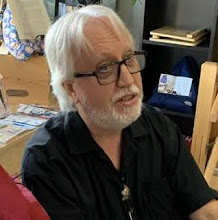
 KEVIN GUTTING
Furlong, 53, who lives in Sunderland, grew up in an Amish community in Ohio. She was one of seven children in the family. Her father's mental illness, she writes, made him at times violent and abusive. At the age of 11, she says, she was sexually molested by her older brother.
What solace she found, Furlong says, came from the love of learning she discovered almost as soon as she started elementary school. Within her community, though, children only went through the eighth grade.
As limited as her education was, Furlong had an inquisitive nature. "From the time I could form questions, they just kept rolling out of my mouth," she said during a recent interview at her home. Why, she wondered, couldn't she continue with school? Why weren't women allowed to speak up in church? Why did her mother blame her for her brother's abuse?
"Those questions always stuck in my craw and I couldn't do anything about it," she said.
Furlong made her first break with the Amish in 1977, when she was 20. Without telling anyone in her family, she enlisted the help of a non-Amish couple whose house she cleaned -- a job, she says, that many Amish women hold. With their help, she boarded a train and headed to Burlington, Vt., a place she knew only from what she'd learned in school and from pictures she'd seen in a magazine. Something about the beautiful Vermont landscape, she says, seemed to promise the peace and tranquility Furlong craved. Once there, she got a room at a YWCA that had a program for women who needed shelter.
Her stay proved short-lived. Four months after she'd arrived, a group of her Amish relatives arrived in a van from Ohio to take her back. Against her will, Furlong -- by then working as a waitress in a Pizza Hut --gave up and returned. For the next three years, she lived in a nearby home, away from her parents, and taught school.
By 1980, though, Furlong was determined to leave again. This time she had an ally, in the person of David Furlong, whom she'd met in Vermont. He had stayed in touch with her after she'd returned to Ohio, even driving his pickup truck from Vermont to Ohio to visit. The couple married in 1982 and have two sons.
Furlong's desire for an education eventually led her to Smith College in Northampton, where she studied in the Ada Comstock program for nontraditional students. She graduated in 2007. She currently works as a coordinator for the German Department and European Studies Program at Amherst College.
Furlong says non-Amish people are often surprised and puzzled when they first learn that she left the community. That reflects, she says, what she sees as the highly romanticized view of the Amish that novels and films have portrayed. That image, she says, is one of an earnest, close-to-the-earth, model community that stands in stark contrast to the rat race of mainstream consumer culture.
Furlong's book is not the first of its kind. Among others, she said, are two books by Ruth Irene Garrett, "Crossing Over: One Woman's Escape from Amish Life," with Rick Farrant, and "Born Amish," with Deborah Morse-Kahn. [see Books page on this site for all 3 books] But "Why I Left the Amish," Furlong said, may be the first to include a frank, first-person account of family dysfunction and sexual abuse within the community. While her experience was difficult and painful, she does not claim it is the norm.
Her book ends with the description of the first time she left the Amish, in 1977. She is currently working on a sequel that will be co-written with her husband.
"My book is not going to be the last," she said. "And I think that's a good thing. It is time for those of us who have real stories of Amish life to tell those stories."
What follows are edited, condensed excerpts from an interview with Furlong last week.
Q: It seemed like such a brave thing to just up and leave the life you'd known. I kept wondering if you were terrified inside. Were you?
A: All I had to do whenever I became fearful was think about the past, to think about what I knew. That made the unknown seemed less scary. As I took each step, I discovered that I could fend for myself and that there were people who cared about me. I never thought of it as bravery, I thought of it as desperation.
Q: How did your family track you down in Burlington?
A: My sister squirreled it out of me. I had called her to let them know I was safe and sound. She said she needed to know where I was in case of an emergency.
Q: Why didn't you refuse to go back to Ohio?
A: Overnight, after they came, I had turned into a zombie. Flat affect, no emotion. I couldn't have named it at the time, but I think I literally had to turn off a switch to handle the situation. I didn't really want to find out if they were going to physically put me on that van. I thought, if I'm going back, I'm going back with my diginity intact.
Q: And David saw all this happen?
A: David and I had met in the four months I was in Burlington and there was a budding romance. He had to stand by and watch me go back, knowing it was not my choice and that was the hardest thing he ever did. He kept trying to keep in touch with me and I kept telling him it was impossible.
Q: Did you go back thinking that you were going to try to make your life with the Amish work?
A: Yes I did, and when David came to visit me the first time, I basically told him to get lost. But he kept writing. I'm surprised that he hung in there with our relationship. It was a tough beginning.
Q: What changed that prompted you to finally leave for good?
A: I was seeking counseling for an eating disorder. Even as an Amish person, I was able to do that. The counselor actually helped me look at all my options. I knew I wanted to further my education and I knew I wanted to be with someone who understood me.
I went down the road of facing my past, even though it was rough -- very rough. It was a grief all its own. I remember saying to the counselor, it feels like there is no bottom. She would tell me, sometimes the only way out is through. And, you know, I found that life is not so bleak as I had thought.
Q: Your parents are no longer living, but have your siblings seen the book?
A: When it came out, I sent it to my sisters. They were upset. I know I've revealed too much as far as they're concerned, but they haven't said it isn't true. I don't know if my brother has read it.
Q: During your childhood, were you aware that the world outside was different?
A: Yes. People think that all the Amish live in exclusive villages, but it's not like that. The closest neighbors to us weren't Amish. So at Christmas, I'd be peering out the window and I'd see their Christmas tree sparkling in their window and I'd wonder, why can't we have that? You see the outside world, you know you're not a part of it and you wish you could be.
Q: You write about going both to Amish and public schools. What was the Amish school like?
A: It was one room, with a thick canvas curtain down the center of the room. One teacher taught lower grades; then grades five through eight were on the other side of the curtain. We'd usually start with math in the morning, then spelling, reading, geography, history, and so on.
In our school, the standards were fairly high. In some Amish schools, there's a huge turnover of teachers and they don't have a handle on discipline.
Q: Why do you think you liked school so much?
A: I loved learning. I also think school had something I didn't have at home and that was stability. I had my own desk, I could organize it the way I wanted, it was my own little domain. It was ordered, there was no abuse there.
But there was also a lot of competition and pettiness among the Amish girls, way worse than in the public schools. I think it was because we had this hierarchy -- men at the top, the boys, the women and girls at the bottom. So to rise up a little bit, to be well-regarded, the girls will fight to get just a little further up. Everybody knows everyone's vulnerabilities and they'll use it in a nasty way.
Q: Do you think the Amish communities are basically cults?
A: To me, because the Amish are so steeped in tradition, it's more a culture than a cult. But it's no easier to leave a culture than a cult because you're usually born into it. The Amish teach their children that if they leave, all hope of salvation is lost. That's a pretty tough thing to overcome.
Q: Are there positive ways in which being raised Amish has stayed with you?
A: Oh, absolutely. This braided rug right here -- my mother taught me how to make them. I learned to quilt, and to do all the homespun arts, baking and crafts. The Amish work ethic has stayed with me, not to shy away from hard work. The Amish teach you to be humble and not to be somebody you're not. I brought that with me, too.
And the Amish do have a way of facing difficulties. When a death occurs, the community bands together. As soon as they hear about it, people they will come into the home, take all the furniture out, and move the church benches in. They will stay with the body through the night, around the clock, and it's very comforting for the family to know that someone is there. They don't hide death even from the children.
Q: That romantic view of the Amish that you've described reminds me of that Harrison Ford movie, "Witness," the story of the star-crossed romance between the Amish woman and the "English" man. What was your reaction to that?
A: I remember walking out after seeing it with David, and almost feeling I should have my Amish clothes on -- the movie made me feel like I was back there. There were two people talking behind us. One said, "you know, it's too bad that either she couldn't leave and or he couldn't stay." And the other one said, "but it had to be that way." And I came this close to turning around and saying to them, "oh no, it doesn't!"
Q: In today's world of smart phones and social networking, do you think the Amish can really keep modern technology from their kids?
A: As a matter of fact, that is happening with the cell phones. The young people can keep those a secret, if they're careful. I have no idea where that will lead, but there's a lot of speculation going on about it.
Q: What about you? I'm wondering whether you use any electronic gadgets.
A: If one more person tells me I need an e-reader, I'm going to scream. I have a phone that I always forget to use. I have never texted. I don't have an iPod but I do love my Mac computer. I like cameras, dishwashers, and microwaves. And let's put it this way, I love my indoor plumbing!
This article was found at:
RELATED ARTICLES:
Amish culture of secrecy protected child molester, church leaders may be charged for not reporting child abuse
4 Amish bishops who "shunned" child molester charged with failing to report sexual abuse of children
Missouri court rules Amish elders are "mandated reporters", must stand trial for failing to report child abuse
Amish man gets 20 years for child rape, wife gets probation for failing to report abuse, elders on trial next
Amish distrust of outsiders creates culture of fear and secrecy, prevents reporting child abuse to authorities
Amish man who sexually abused kids for years finally reported to police after third excommunication
Missouri court rules Amish elders are "mandated reporters", must stand trial for failing to report child abuse
Amish man gets 20 years for child rape, wife gets probation for failing to report abuse, elders on trial next
Amish distrust of outsiders creates culture of fear and secrecy, prevents reporting child abuse to authorities
Amish man who sexually abused kids for years finally reported to police after third excommunication




 Posts
Posts

